
The Implications of a Democratic Victory in the US Elections for Ankara
What Impact Will the 2026 US Elections Have on Turkey’s Domestic Politics and Erdoğan’s Future?
 H
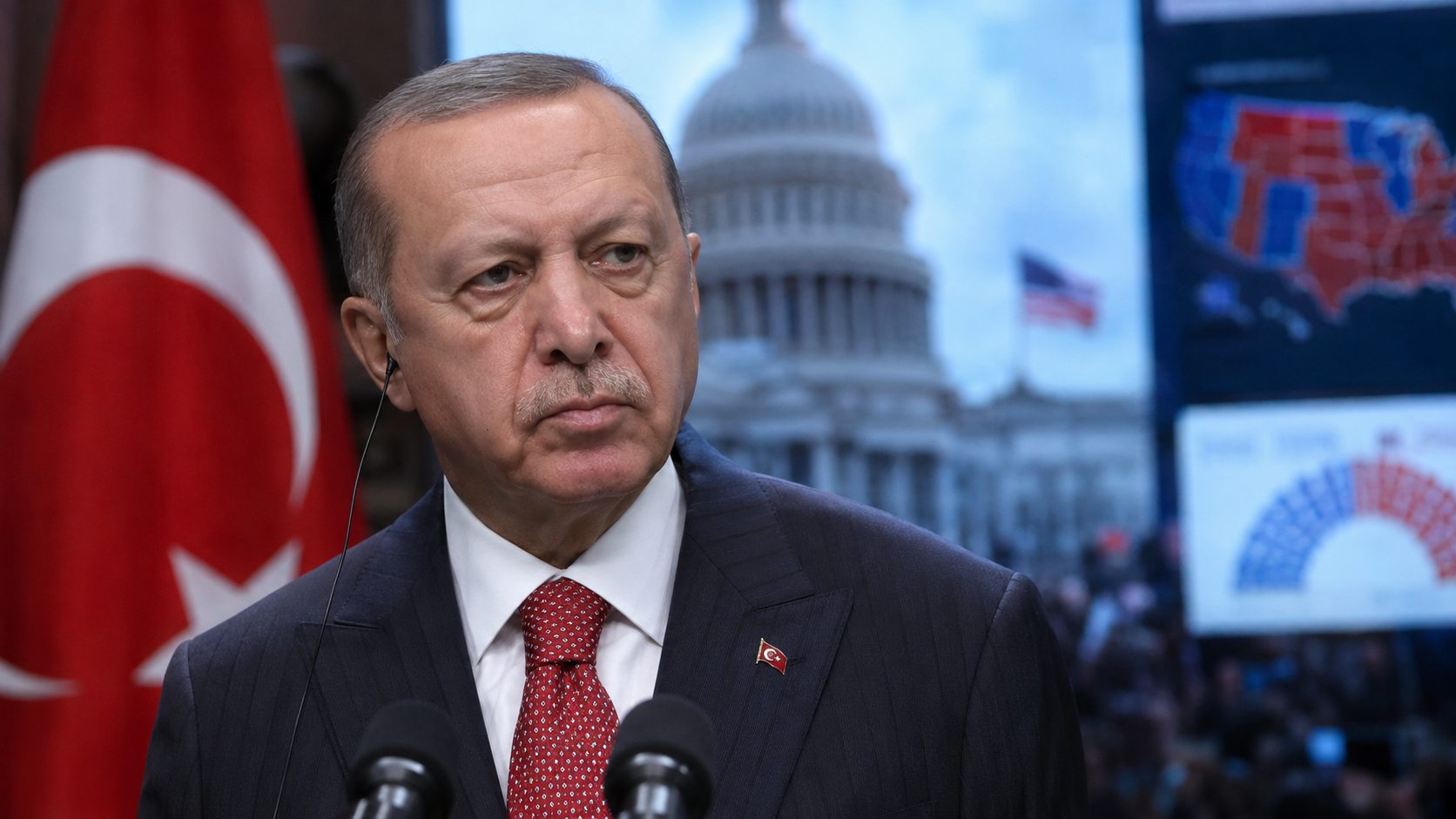
Zaviye Institute: In the November 3, 2026 midterm elections, the Democrats succeeded in gaining control of both the House of Representatives and the Senate. This outcome constitutes a major political defeat for Donald Trump and the Republicans. This situation has three strategic implications for Turkey:
a) Reduced predictability in Ankara–Washington relations
b) Increased importance of Turkey’s strategic autonomy
c) The return of Congress to prominence in bilateral relations
In light of the three implications outlined above, this note examines the impact of the US elections on domestic developments in Turkey.
Read more: Will the Erdoğan–Trump rapprochement remain sustainable?
Impact on the Kurdish Peace Process and the “Turkey Without Terrorism” Project
This is one of the most important domestic and regional dimensions affected by developments in the United States. Turkey’s Kurdish peace process is not merely a domestic security initiative; it is directly connected to developments in Syria, Iraq, US security calculations, and the position of Kurdish forces in the region.
At present, this process has entered a sensitive phase. The Peoples’ Equality and Democracy Party (DEM) has spoken of approaching the end of the first stage—namely, the disarmament and withdrawal of the PKK from armed struggle—and has linked the second stage to democratic reforms, the release of political prisoners, and the expansion of Kurdish rights. Moreover, the passage by the Turkish parliament of legislation concerning the return and reintegration into society of some PKK members has been an important step in translating the political agreement into a legal framework.
Nevertheless, one of Ankara’s most important concerns is whether US support for Syrian Kurdish forces—particularly structures linked to the Syrian Democratic Forces (SDF)—will continue or change. If the Democrats increase their influence in Congress, pressure to maintain cooperation with Syrian Kurdish forces and to pay greater attention to Kurdish rights and security is likely to increase.
This situation could have three consequences:
1. Increased Turkey’s security sensitivity regarding its southern borders;
2. Increased pressure on Ankara to accept new political and security arrangements in northern Syria;
3. Increased importance of Turkey’s domestic negotiations with Kurdish actors in order to prevent the transfer of Syria’s tensions into the country.
Of course, a Democratic Congress alone cannot determine the US government’s operational policy in Syria; however, it can increase the political cost of unilaterally changing US policy.
Read more: The Institutional Design Test in Turkey’s Kurdish Peace Process
Impact on Turkey’s Domestic Elections and Erdoğan’s Political Future
Another major indirect effect of the US elections is their impact on the electoral calculations of Erdoğan and opposition parties in Turkey. The US midterm elections have been held at a time when the Trump administration is facing declining domestic political support. This development could impose “political constraints” on Erdoğan. In other words, a Democratic victory could increase the cost of some of the Turkish government’s domestic and foreign policies, particularly on issues such as media and judicial restrictions; the treatment of political opponents; the status of elected mayors and officials; the independence of the judiciary; civil rights and political freedoms; and the democratic process for resolving the Kurdish issue.
In this context, the results of the US elections may convey to Erdoğan the message that “the continuation of political power is not possible solely through the control of institutions and security management; it also requires rebuilding the social base and increasing electoral legitimacy.”
For Turkey’s opposition parties, particularly the Republican People’s Party (CHP), this development could provide an opportunity to strengthen the discourse of democracy and the rule of law, as well as to advocate a return to a parliamentary system or reform of the presidential system.
Nevertheless, it appears that the most important issue in examining the consequences of the US elections for Turkey is their impact on the relationship between the state, society, and democracy. In recent years, Turkish politics has been accompanied by “a concentration of executive power, a diminished role for intermediary institutions, and increased conflict between the state and segments of society.”
This situation can be analyzed through the concept of “the evolving risk-taking of democracy in complex societies”—that is, circumstances in which political decision-making mechanisms gradually move away from participatory institutions while veto players and unaccountable structures increase.
From this perspective, the US elections have three possible effects on Turkish democracy:
۱. Increased pressure for institutional accountability
A Democratic victory in Congress could increase scrutiny of the state of democracy and political rights in Turkey. This issue may create tensions in Turkey–US relations, but at the same time it could help strengthen the discourse of the rule of law within Turkey.
۲. Strengthening or weakening the government’s legitimacy
If Erdoğan can achieve tangible gains through resolving the Kurdish issue, improving economic conditions and rebuilding foreign relations, he may strengthen his political legitimacy; however, if Turkey’s foreign policy moves toward greater confrontation with the West while domestic reforms are simultaneously halted, the gap between the government and society is likely to widen.
۳. The Growing Importance of a Domestic Political Agreement
To move beyond its current situation, Turkey needs a durable agreement among the government, political parties, civil society and social forces; within this framework, the Kurdish peace process could go beyond a security agreement and become the starting point for rebuilding the political contract between the state and society. If this process is limited solely to disarmament, it may produce a security achievement, but it will not necessarily lead to democratization.
Final Assessment
The results of the ۲۰۲۶ US midterm elections appear to represent a turning point in Turkey’s strategic calculations—not because US foreign policy will change rapidly, but because the decision-making structure in Washington will become more complex and the Trump administration’s political constraints will increase.
The most important consequences of this development can be summarised in three propositions:
In foreign policy: Turkey will seek to use potential disagreements between the White House and Congress to increase its bargaining power; at the same time, however, it will face greater institutional constraints in its relations with the United States.
In domestic politics: The Kurdish peace process will become one of the most important tests facing the Erdoğan government. Its success could strengthen the government’s political position; however, halting reforms after disarmament will increase the risk of a resurgence of mistrust and tensions in relations between the two countries.
In democracy: The US elections may increase international pressure on the Turkish government, but the future of Turkish democracy will depend above all on the capacity of domestic institutions, the quality of party competition, judicial independence and the possibility of rebuilding the state–society contract.
Reader comments