
Ankara’s Surge in Electricity Exports to the Middle East and Europe
Turkey’s Electricity Exports Surpass $500 Million; Ankara on Track to Become a Regional Energy Hub
 Z
Zaviye Institute: Turkey’s electricity exports generated more than $500 million in revenue over 20 months, from January 2025 to August 2026. According to recent data, this significant growth resulted from increased exports to Iraq and Syria, which fully offset the decline in exports to Greece.
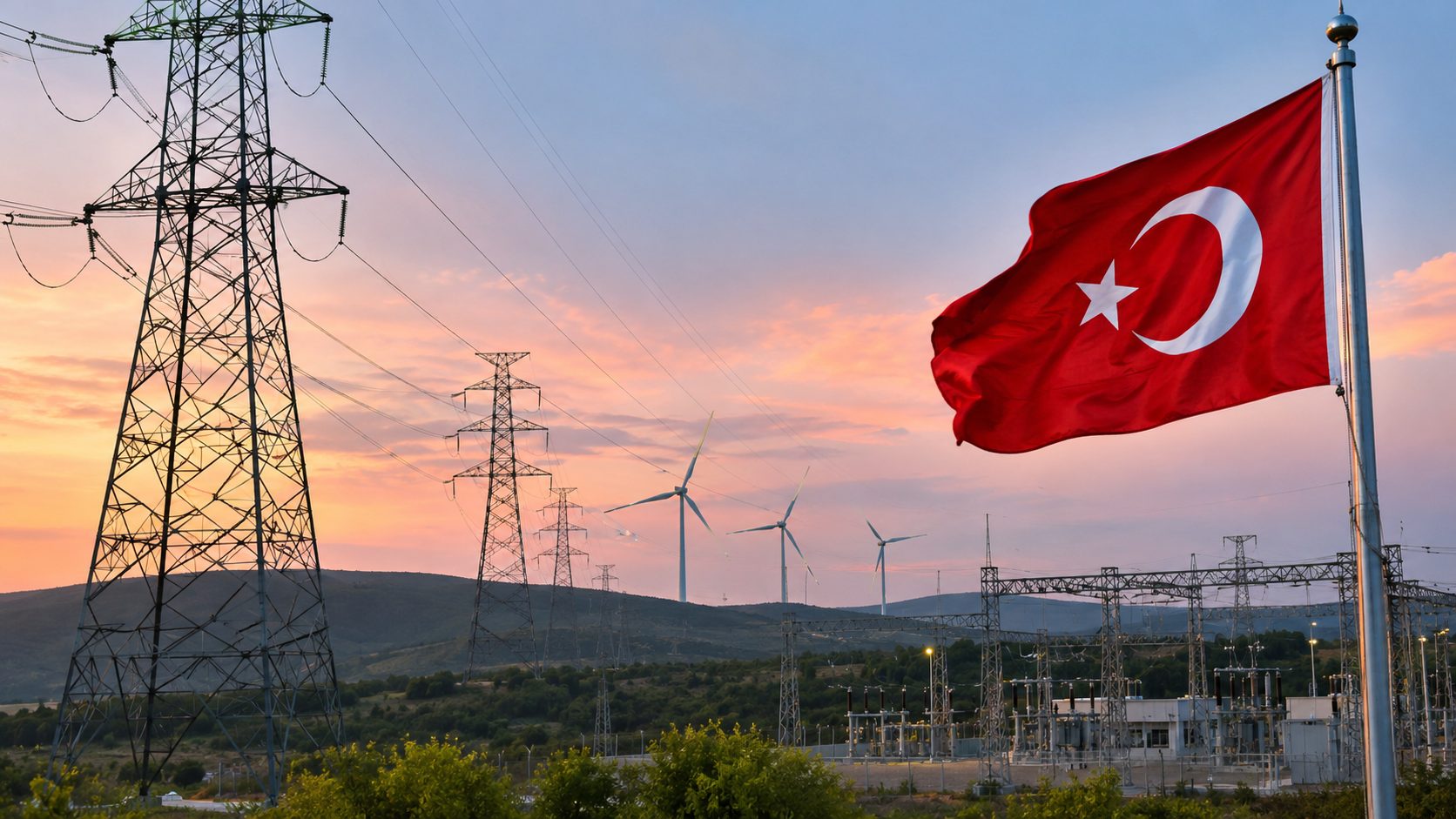
At the same time, Turkey’s unprecedented electricity-export revenues throughout 2025, together with new electricity interconnection projects and supply shortages in neighboring countries, are opening the way for Ankara to strengthen its role as a regional hub for electricity trading. By leveraging its geographical position and its goals of increasing reliance on clean energy sources, the country has significant potential to expand its role in regional renewable electricity trading.
Read more: Turkey’s Major Push to Become the Region’s Green Energy Hub
Turkey’s Strategic Position in the Regional Electricity Trading Network
Turkey’s electricity grid extends across three main regions: Europe, the Caucasus and the Middle East. In Europe, Turkey is connected to Bulgaria and Greece; in the Caucasus, to Georgia; and in the Middle East, to Iraq and Syria. The country also has interconnection lines with Iran, Azerbaijan and Armenia, although not all of them are currently operational.
Turkey’s Electricity Export Map
A report by the Centre for Research on Clean Energy (EMBER) shows that Turkey’s electricity exports to Iraq increased after the 300-megawatt electricity line between the two countries was reactivated in July 2024. During 2025, operational capacity doubled, making Iraq the largest export destination, but exports were halted in late August of that year due to payment arrears and then resumed in May 2026.
By August 2026, Ankara’s exports to Iraq were approaching full utilisation of the interconnection capacity, reaching 0.5 terawatt-hours in the first eight months of 2026, while annual exports amounted to 1.3 terawatt-hours over the whole of 2025. In Syria, Turkey’s electricity exports have stabilised at around one terawatt-hour per year in recent years as political and infrastructure conditions have improved. The 500-megawatt electricity line connecting Birecik in Turkey to Aleppo in Syria was brought back into operation in September 2026.
Decline in Exports to Greece and Increased Electricity Trade with Bulgaria
On the European side, Turkey’s electricity exports to Greece fell from 2–3 terawatt-hours per year (through 2022) to 0.7 terawatt-hours in 2024 and 0.5 terawatt-hours in 2025, as Greece became a net electricity exporter from 2024 onward. By contrast, Turkey has been a net electricity exporter to Bulgaria since 2024, with exports reaching 1.3 terawatt-hours in the first eight months of 2026. Its imports were also recorded at approximately 0.1 terawatt-hours.
Cross-Border Electricity Interconnection in Turkey
Turkey’s cross-border electricity interconnection capacity for imports is 2 gigawatts, of which only approximately 1.35 gigawatts is utilised, while nominal export capacity stands at 3.2 gigawatts, of which 2.6 gigawatts is operational. The “EMBER” centre believes that total interconnection capacity could support exports of more than 28 terawatt-hours per year, equivalent to seven times Turkey’s current actual electricity-export volume.
The strategic plan of the Turkish Electricity Transmission Corporation (TEAŞ) targets increasing export capacity to 4.6 gigawatts and import capacity to 4 gigawatts by 2028. The long-term climate strategy also aims to increase interconnection capacity for exports to 6.75 gigawatts and for imports to 6.6 gigawatts by 2035.
The Role of Renewable Energy in the Development of Turkey’s Electricity Exports
Renewable energy supports these plans, accounting for 43 percent of electricity generation in Turkey in 2025, while the country has set a target of tripling wind and solar capacity by 2035. Increased renewable-energy generation, particularly hydropower generation, led to an unprecedented decline in wholesale electricity prices in spring 2026, underscoring the importance of exporting surplus renewable electricity rather than curtailing generation or selling it at low prices.
European expansion plans include the construction of a second transmission line between Turkey and Greece by 2031, as well as a study on developing a new line between Turkey and Bulgaria, with the possibility of becoming operational by 2035. Turkey, Azerbaijan, Georgia and Bulgaria also signed a memorandum of understanding in April 2025 on a green electricity transmission and trading project.
Read more: TANAP Electricity: Turkey and Azerbaijan’s Plan to Transmit Green Energy to Europe via the Caucasus
Opportunities to Increase Turkey’s Electricity Exports
The electricity crisis in the Middle Eastern countries has created a rare opportunity to increase Turkey’s electricity exports. In Iraq, electricity demand reached 60 gigawatts in the summer of 2026, while available supply did not exceed 22 gigawatts. In Iran, the energy crisis has continued since the beginning of 2025, and household power outages have exceeded two hours. Meanwhile, most areas of Syria receive electricity for only 2 to 4 hours per day because of extensive damage to infrastructure and resource constraints.
Electricity generated by Turkey’s expanding wind and solar energy projects could help address supply shortages among its neighbours and reduce their reliance on gas- and oil-fired power plants. In addition, one of the proposals put forward involves expanding electricity interconnection lines to Saudi Arabia via Syria and Jordan, thereby broadening the geographical scope of electricity trade and creating a basis for cooperation between Turkey and the electricity markets of the Gulf.
Turkey–Saudi Energy Cooperation: A Step Towards the Gulf Electricity Market
In this context, Saudi Arabia and Turkey signed a memorandum of understanding on cooperation to strengthen collaboration in renewable energy and electricity projects. The agreement was signed on the sidelines of the 31st United Nations Climate Change Conference (COP31) in Antalya and followed the previous renewable energy agreement, which had entered into force on 21 October 2023.
Turkey’s electricity consumption is projected to reach 510.5 terawatt-hours by 2035, necessitating a major upgrade of the country’s energy infrastructure. Under the new memorandum, the development of renewable energy projects with a total capacity of 5,000 megawatts by ACWA Power will be implemented in two phases: the first phase will comprise 2,000 megawatts and the second 3,000 megawatts, with a focus on wind power plants, the integration of high-voltage direct current (HVDC) transmission, and battery energy storage systems to enhance grid capabilities.
ACWA Power’s existing investments in Turkey include a 927-megawatt power plant, which is expected to reduce carbon dioxide emissions by approximately 1.8 million tonnes annually.
Reader comments