
London’s Push into the South Caucasus
Dimensions, Objectives and Implications of the UK-Azerbaijan Strategic Partnership in the South Caucasus
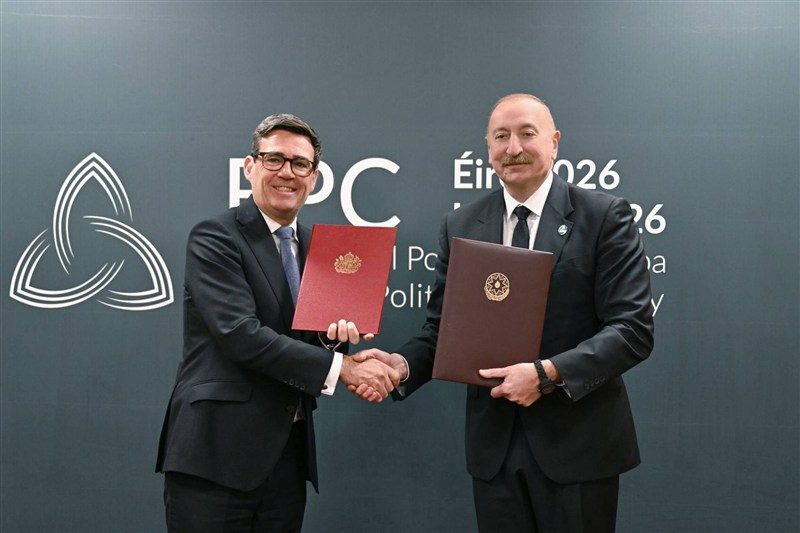
Zaviye Institute: The signing of a strategic partnership document between the Republic of Azerbaijan and the United Kingdom in Dublin on 12 November 2026 (21 Aban) is one of the important developments in the sphere of relations and dynamics in the South Caucasus. This agreement has taken shape at a time when, following the developments in Karabakh, the process of normalising relations between Baku and Yerevan, and competition over transit routes, the South Caucasus has entered a new phase of geopolitical dynamics. In this context, London is seeking to upgrade its position from that of an economic and energy partner to an influential actor in the region’s political, security and connectivity arrangements.
Read more: Reflections on Britain’s Presence and Influence in the South Caucasus
Britain’s first objective is to consolidate and expand its economic interests. The long-standing presence of BP in the oil and gas industry of the Republic of Azerbaijan has created a strategic link between the two countries. London nevertheless understands well that the future of the Caucasus cannot be reduced to hydrocarbon resources alone. Support for the Middle Corridor, the development of transport infrastructure, renewable energy and new technologies indicates that Britain is seeking a larger share of the connectivity chain linking Central Asia to Europe. If developed, this route could enhance the economic and transit importance of the Republic of Azerbaijan.
Read more: With $40 Billion, Britain Remains Azerbaijan’s Largest Foreign Investor
The second issue is London’s gradual entry into the field of security cooperation. The document’s emphasis on military training, enhancing defence capabilities, border management and cooperation between defence industries indicates Britain’s desire to move beyond purely economic relations. This agreement does not, of course, signify the formation of a military alliance or the deployment of British forces in the region, but it could pave the way for increased defence interactions and institutional ties between the two countries.
Another noteworthy point is London’s differing approach to the Republic of Azerbaijan and Armenia. Britain had previously signed a similar document with Yerevan, but in that document issues such as democracy, human rights and independent media received greater prominence. By contrast, the document with Baku focuses primarily on economic, defence and technological cooperation. This difference indicates that, in shaping its relations with actors in the Caucasus, London is pursuing distinct economic and geopolitical considerations alongside its professed values.
From a regional perspective, these developments should be examined within the framework of broader power competition. The relative decline of Russia’s role in some Caucasus dynamics following the war in Ukraine has created greater scope for the diplomatic activity of Western actors. Britain, too, is seeking, by strengthening its relations simultaneously with Baku and Yerevan, to play a more effective role in the peace process, the establishment of rules governing regional connectivity and the future of transit routes.
For Iran, the significance of this issue extends beyond British-Azerbaijani bilateral relations. Any change in the South Caucasus’s connectivity and security arrangements could affect Tehran’s economic interests, transit position and security considerations. In particular, the development of east-west routes, if designed without the participation of all regional actors, could lead to increased geopolitical competition.
Read more: Reflections on the Growing Trend of Britain’s Arms Influence in the South Caucasus
At the same time, not every form of cooperation between Baku and London should necessarily be regarded as an action against Iran. The Republic of Azerbaijan is also seeking to diversify its foreign partners and attract investment and technology. What matters to Tehran is the practical nature of defence cooperation, the fate of connectivity routes and the extent to which the sovereignty of states is respected in regional projects.
Overall, the strategic partnership between Britain and the Republic of Azerbaijan can be viewed as part of London’s effort to transform economic influence into a lasting political and security presence in the South Caucasus. The extent to which this objective is achieved, however, will depend on the implementation of commitments and the responses of regional actors. For Iran, an effective response lies in strengthening active diplomacy, expanding transit cooperation and maintaining balanced relations with its neighbours—an approach that could prevent a decline in Tehran’s role in the future dynamics of the Caucasus.
Reader comments