
Revisiting Erdoğan’s Message on the Anniversary of the Founding of the Republic of Türkiye
From Atatürk’s Republic to Erdoğan’s Diplomacy
 H
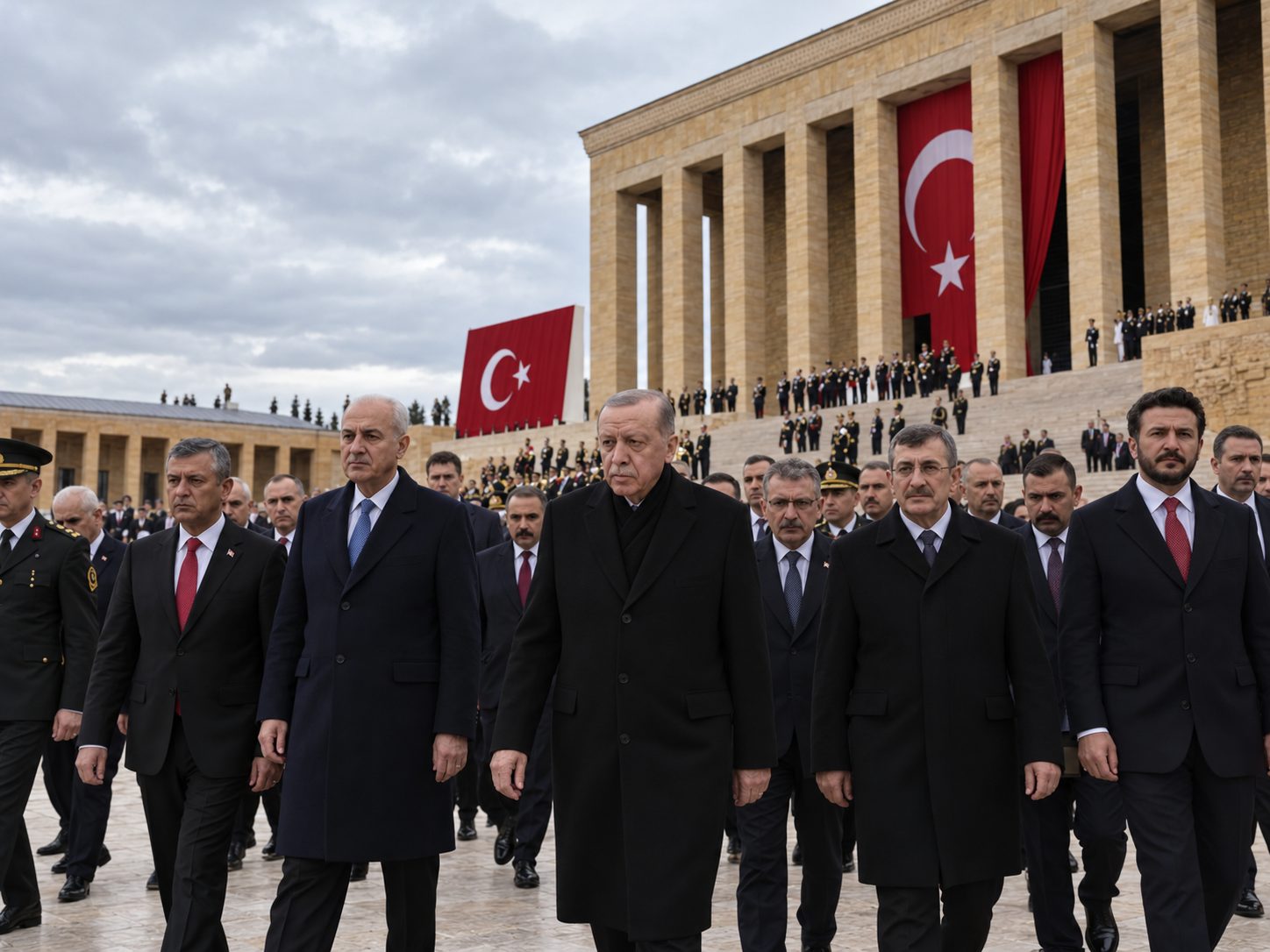
Zaviye Institute: The Turkish president’s video message marking the 103rd anniversary of the founding of the Republic should not be assessed merely as an ordinary commemorative greeting. In the message, Erdoğan, in keeping with his characteristically ambitious approach, stressed that while maintaining its own stability, Turkey is assuming responsibility for resolving disputes at a time when wars and crises are unfolding in its neighbourhood and around the world.
He described the Republic as a symbol of the nation’s will to achieve independence, live freely and determine its own destiny, and characterised the progress made over the past 24 years in the defence, energy, transport and diplomatic sectors as steps towards achieving the goal of the Turkish Century. These remarks provide the basis for an analytical concept that could be termed the “narrative responsibility-oriented Republic.”
This concept refers to using the narrative of the Republic’s founding and the experience of independence as a source of legitimacy for accepting and distributing responsibility at the regional and global levels. Within this framework, Turkey is transforming not only its hard and soft power, but also its narrative power into a strategic instrument. The roots of this approach can be traced to the tradition of Turkish diplomacy and its persistent emphasis on the slogan “Peace at Home, Peace in the World,” which has its roots in the period of the Republic’s founding and is being reinterpreted today in the form of the Turkish Century.
At the domestic level, the Republic’s ontological security plays a central role. By recalling the national struggle led by Kemal Atatürk, Erdoğan underscored the unity of the nation under difficult conditions. This identity-based security is not merely defensive; Turkey converts it into diplomatic capital. The experience of emerging from the War of Independence, legitimacy crises and subsequent reconstruction allows Ankara to present itself as an actor that, in the conventional sense, possesses the credentials to mediate and assume responsibility for resolving the crises of others. In this view, domestic stability is not merely a necessary condition for foreign policy; it is a source of legitimacy for that policy. The Republic serves as a narrative platform on which Turkish diplomacy is built.
At the regional level, this idea acquires meaning in cases such as the Palestine-Israel crisis, Iran and reconciliation efforts. Turkey seeks to navigate among the discourses of Israeli security, Palestinian resistance, peace between Iran and the United States, and the Arab-Islamic regional order. A narrative responsibility-oriented approach entails redefining the concept of security: security that encompasses not only the security of states, but also the security of identity, territory and dignity. In relation to agreements such as the Mecca Agreement, which some regard as a symbol of intra-Islamic reconciliation, Turkey seeks to play the role of a narrative guarantor. Without direct involvement in the text of the agreement, it presents its experience of reconciliation following the War of Independence as a model that can be offered to others. In this view, Turkey is an identity mediator, not merely a geographic mediator—an actor that proposes its own narrative of independence as a framework for the reconciliation of others.
Read more: Why Will Israel’s Elections Not Unlock Ankara’s Geopolitical Gridlock?
At the transregional level, a scenario of tensions between Iran and the United States can be regarded as a testing ground for this idea. Rather than merely balancing power, Turkey seeks to pursue a balance of responsibility. This means neither fully accepting the threat narrative on the one hand nor fully accepting the victimhood narrative on the other, but rather attempting to construct a third narrative in which the region is the primary victim of war and Turkey presents itself as the voice of that narrative.
The combination of traditional instruments—such as NATO membership, relations with the West, and energy ties with Russia and the Gulf states—with an independence-oriented narrative forms a form of narrative smart power. Within this framework, Turkey seeks to be a responsible actor that possesses both channels of communication and the historical legitimacy to warn of the costs of war.
At the Caucasus level, the relationship with Azerbaijan is a clear example. The slogan “one nation, two states” has created identity-based proximity, but the two countries’ policies towards Iran, Russia, Israel and the regional security order differ in certain respects. More recently, disagreements have emerged over dress-code regulations in Azerbaijani schools, prompting reactions in Turkey and decisions such as restricting the entry of certain Turkish citizens.
Read more: Israel’s Shadow over Turkey-Azerbaijan Relations: Was the Hijab an Excuse or the Root of the Crisis?
These disagreements are primarily formal and concern the implementation of domestic regulations rather than being substantive and strategic. Within the framework of the narrative responsibility-oriented Republic, Turkey seeks to act as a regulator of the shared narrative rather than imposing a single policy line. Preserving the narrative of brotherhood and independence while accepting diversity in policy practice—and even formal disagreements—prevents tactical or superficial divisions from becoming identity-based rifts. From this perspective, the Caucasus is defined as part of the narrative space of the Turkish Century: a region in which experiences of independence, war and reconstruction are interconnected as a network of narratives, while policy disagreements remain at the level of intra-narrative diversity.
The synthesis of this idea suggests that Erdoğan’s remarks can be understood as the announcement of a narrative strategy in foreign policy. The republic is the source of legitimacy and ontological security; a responsibility-oriented approach signifies accepting an active role in resolving conflicts beyond merely defending national interests; and the narrative dimension entails using the history of independence, war and recent advances as a semantic framework for mediation, balancing responsibilities and managing divisions.
Cases such as Israel and Palestine, reconciliation agreements, scenarios of transregional tensions and relations with Azerbaijan are testing grounds for this strategy. Turkey is seeking to harness the power of the independence narrative to shape a fluid, multipolar security order—one in which responsibility is defined not solely on the basis of material power, but also on the basis of historical and identity-based legitimacy.
Read more: Reflecting on Erdoğan’s Multilayered Strategy at the UN General Assembly
This narrative is consistent with ongoing developments in Turkey’s foreign policy. Repeated emphasis on mediation in regional crises, efforts to reform international structures, and the linking of domestic progress to a global role are all signs of a movement toward this model. Ultimately, the success of such a strategy depends on Turkey’s ability to preserve domestic narrative coherence while maintaining flexibility in policy implementation—an undertaking that requires a careful balance between historical identity and today’s geopolitical realities.
Reader comments