
Aliyev’s Strategy to Strengthen the Army and Consolidate Military Power in the South Caucasus
Azerbaijan’s Military Budget: Why Did Baku Allocate 21 Percent of Its 2027 Budget to the Army?
 Z
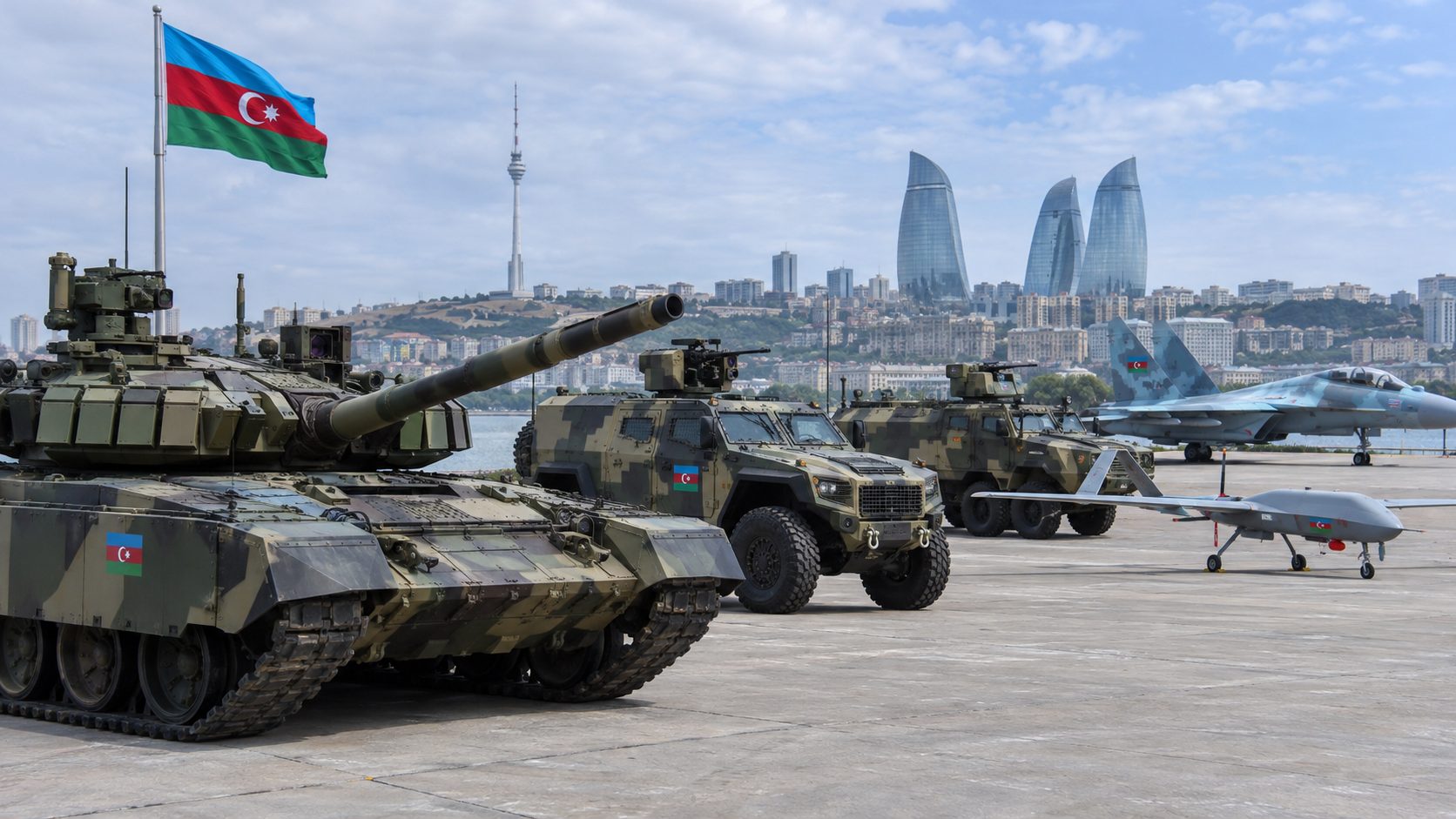
Zaviye Institute: The allocation of approximately 8.8 billion manats, equivalent to $5.2 billion, to Azerbaijan’s defense and security sector in the 2027 budget bill demonstrates the continued prioritization of military power in Baku’s policymaking. This figure accounts for approximately 21 percent of the country’s total budget and reflects Ilham Aliyev’s government’s efforts to consolidate military superiority, modernize the armed forces and strengthen Azerbaijan’s strategic position in the South Caucasus.
Why Is Baku Continuing to Arm Itself?
Despite the end of the Second Karabakh War, the return of control over the region to Azerbaijan and progress in peace negotiations with Armenia, Baku’s defense policy has entered a new phase. Unlike during the war, when the focus was on retaking territory, the priorities now are maintaining deterrence, modernizing equipment and controlling the borders.
Meanwhile, progress in peace negotiations with Armenia has not diminished the importance of military power in Baku’s security calculations. Azerbaijan continues to monitor Armenia’s military developments, particularly its acquisition of new weapons from foreign partners, and regards maintaining combat superiority as a guarantee against changes in the regional balance.
Aliyev’s Warning About the Collapse of the International Order
Against this backdrop, recent remarks by Ilham Aliyev, the President of Azerbaijan, at the congress of the ruling New Azerbaijan Party are particularly significant. Referring to the continuation of wars and crises in the surrounding region, he emphasized that international mechanisms for preventing conflicts had lost their effectiveness.
Aliyev stated that “international law has completely ceased to function,” asserting that Azerbaijan must attain such strength that no country would even contemplate taking provocative action against it.
These remarks indicate Baku’s security-oriented approach to its regional environment—an approach in which military power is regarded as complementary to diplomacy and as an instrument for preserving geopolitical gains.
Nevertheless, Aliyev’s emphasis on the ineffectiveness of international law raises the question of whether increasing reliance on military deterrence can lead to lasting stability or will create the conditions for intensified arms competition.
From Pakistani Fighter Jets to Drone Industries
A significant part of Azerbaijan’s military strategy is devoted to modernizing its air force, developing drone systems and strengthening defense infrastructure.
The purchase of Pakistani-Chinese JF-17 multirole fighter jets is one example of Baku’s efforts to diversify its sources of arms and enhance the operational capabilities of its air force. Maintaining these fighters, training pilots and supplying support equipment also impose recurring costs on the defense budget.
Read more: Developing Azerbaijan’s Defense Industry: Baku’s New Strategy for Military Power
At the same time, military cooperation with Turkey has extended beyond arms purchases to include training, technology transfer and the development of domestic capacity to produce defense equipment. The expansion of the drone industry could also create opportunities for arms exports in addition to meeting domestic needs.
Accordingly, Baku’s defense budget is not merely the cost of maintaining the armed forces; it is also part of a long-term investment to consolidate the country’s military and industrial standing.
Read more: Azerbaijan Among Arms-Exporting Countries: Progress and Obstacles
Security Implications for Iran and the Caucasus
The expansion of Azerbaijan’s military capabilities could affect the security calculations of its neighbors, particularly Armenia and Iran.
For Armenia, the continuation of Baku’s arms superiority could increase incentives to strengthen deterrence and expand military cooperation with foreign partners. Such a trend raises the risk of an arms race even amid progress in peace negotiations.
For Iran, the deepening of Baku’s defense cooperation with Turkey, Pakistan and other foreign partners makes monitoring security developments along its northwestern borders all the more important, although the increase in Azerbaijan’s military budget alone is not evidence of a direct threat to Tehran.
Conclusion
Overall, Azerbaijan’s 2027 defense budget can be regarded as a reflection of the “armed peace” strategy in Baku’s security policy—a strategy aimed at maintaining military superiority while advancing regional diplomacy.
Aliyev’s remarks about the ineffectiveness of international law also indicate that the Baku government continues to regard hard power as one of the most important guarantees of national security. Nevertheless, Azerbaijan’s main challenge is to ensure that the increase in its military capabilities becomes a foundation for lasting peace in the South Caucasus, rather than a catalyst for a new round of arms competition.
Reader comments