
Security Competition in the Eastern Mediterranean
Israel-Greece Alliance Against Turkey
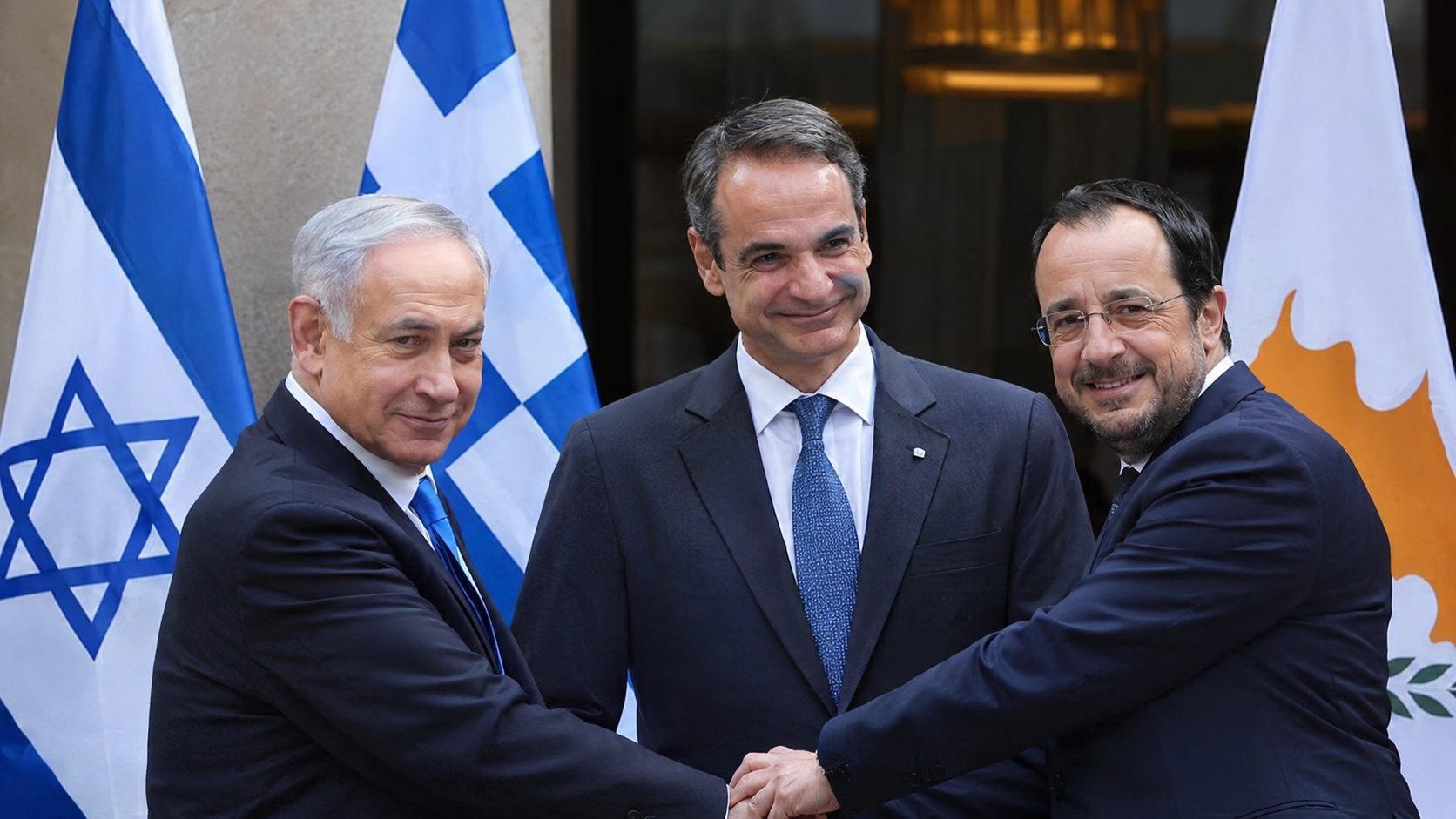
 A
Zaviye Institute: Given the current volatile situation in the Middle East and the sooner or later confrontation between Turkey, under the leadership of the Justice and Development Party (AKP), and the Israeli regime in the occupied Palestinian territories, the emergence of new security and military maneuvers by the Israeli regime and Greece against Turkey on the Mediterranean front appears only natural, particularly in view of the racist nature of this regime’s foreign-policy strategy since its establishment.
Israel’s Peripheral Strategy: Alliance with Non-Arab Actors
According to the well-known strategy devised by figures such as Reuven Zaslany, the Israeli regime, as a heterogeneous entity at the heart of the Middle Eastern countries, must make every effort to establish ties with the region’s non-Arab countries governed by secular political systems.
Monitoring current developments, including the holding of the strategic “Achilles Shield” naval exercise, reveals that such developments can be understood and examined within this framework. Below, we examine the details and rationale behind the expansion of relations between the Israeli regime and Greece against Turkey and the pro-Palestinian Muslim Brotherhood currents, as well as the future of this confrontation.
Greece’s Lucrative Arms Market: Opportunism by the Israeli Regime
One of the curiosities of the history of international relations after the Second World War is Greece’s transformation into one of the close allies of the United States and the Israeli regime. Once coveted jointly by the communists and the liberal West, this country eventually managed to rebuild itself by entering the Western bloc and rising from the ruins of the Second World War.
In the meantime, despite the ups and downs in its relations with the Israeli regime and the United States, available evidence indicates that in recent years it has managed to establish good relations with both sides. Perhaps the most important factor behind the Israeli regime’s tangible presence in Greece is Tel Aviv’s effort not to fall behind Turkey’s growing power in the region’s arms market, since according to available statistics, arms exports such as drones and low-cost defense systems brought Turkey revenues of $10 billion last year.
In addition to posing a threat to the Israeli regime’s military security from Arab-Islamic movements that generally aspire to liberate Palestine and are considered strategic allies of Ankara and Iran in this regard, such revenues could permanently endanger the Israeli regime’s unchallenged dominance of the region’s arms markets, one of the vital arteries of its economy. This is why, prior to the aforementioned exercise, we witnessed the signing of a €3 billion arms deal between Greece and the Israeli regime—an issue that some assess as an Israeli-Greek alliance against Turkey.
Cyprus: The Battle for Strategic Depth
Another highly important issue that makes the political-security situation in the equation among Turkey, Greece and the Israeli regime particularly acute is the old wound of Cyprus. This island, disputed between Turkey and Greece and divided into Turkish and Greek (northern and southern) parts, has in recent years in particular constituted a relatively suitable environment for the Israeli regime—a regime that, with a maximum area of 22,072 square kilometers, has suffered for decades from a lack of strategic depth and additional living space.
For this reason, in recent years, particularly since 2024 (1402–1403 Solar Hijri), in addition to the transformation of southern Cyprus into a base for the Israeli regime’s strategic fighter jets such as the F-35, amid growing threats of Iranian missile attacks and the overt confrontation with Turkey’s neo-Ottoman ideology, we have witnessed extensive purchases of real estate in Cyprus’s commercial areas, such as the port city of Larnaca, alongside the deployment of Barak MX air-defense systems with an operational range of 400 kilometers. These measures are intended to turn the southern part of the island into a dagger pointed at Ankara’s flank.
The Israeli-Greek Alliance against Turkey: The Role of Cyprus
In addition to increasing diplomatic tensions between Ankara and the Greek Cypriot part of the island, such measures have the potential to push the fragile relations between Greece and Turkey into a bloody phase. It is therefore natural for the Israeli regime, with the aim of pressuring Turkey in the military and regional arenas, to make special investments in southern Cyprus, traditionally regarded as part of Greece’s sphere of influence, and to militarily equip the Greek Cypriot part through various costly military contracts.
Read more: Israel and Cyprus step up joint exercises in the eastern Mediterranean
The Future of the Confrontation: The Possibility of Opening a New Front in the Mediterranean
But the strategic point is that, given the historical and ethnic roots of the tensions between Turkey and Greece over the Cyprus issue, and in light of the Israeli regime’s recent maneuvers in recent months and days, it is by no means unlikely that the flames of military tensions between Turkey and Greece will be rekindled—this time as a result of provocations by the Israeli regime through the Israeli-Greek alliance against Turkey.
In that case, the Israeli regime may soon face the opening of a new proxy (or semi-proxy) front in the Mediterranean or in places such as Syria—a situation that, given the Israeli regime’s strategic weakness in the naval domain, could inflict a devastating blow on its financial and military viability.
Read more: Yemen’s Trap for Ankara: Is Trump Dragging Turkey into a Costly War?
Reader comments