
From the JCPOA Scenario to North–South Corridors
Why Is Russia Seeking an Iran–US Agreement?
 Z
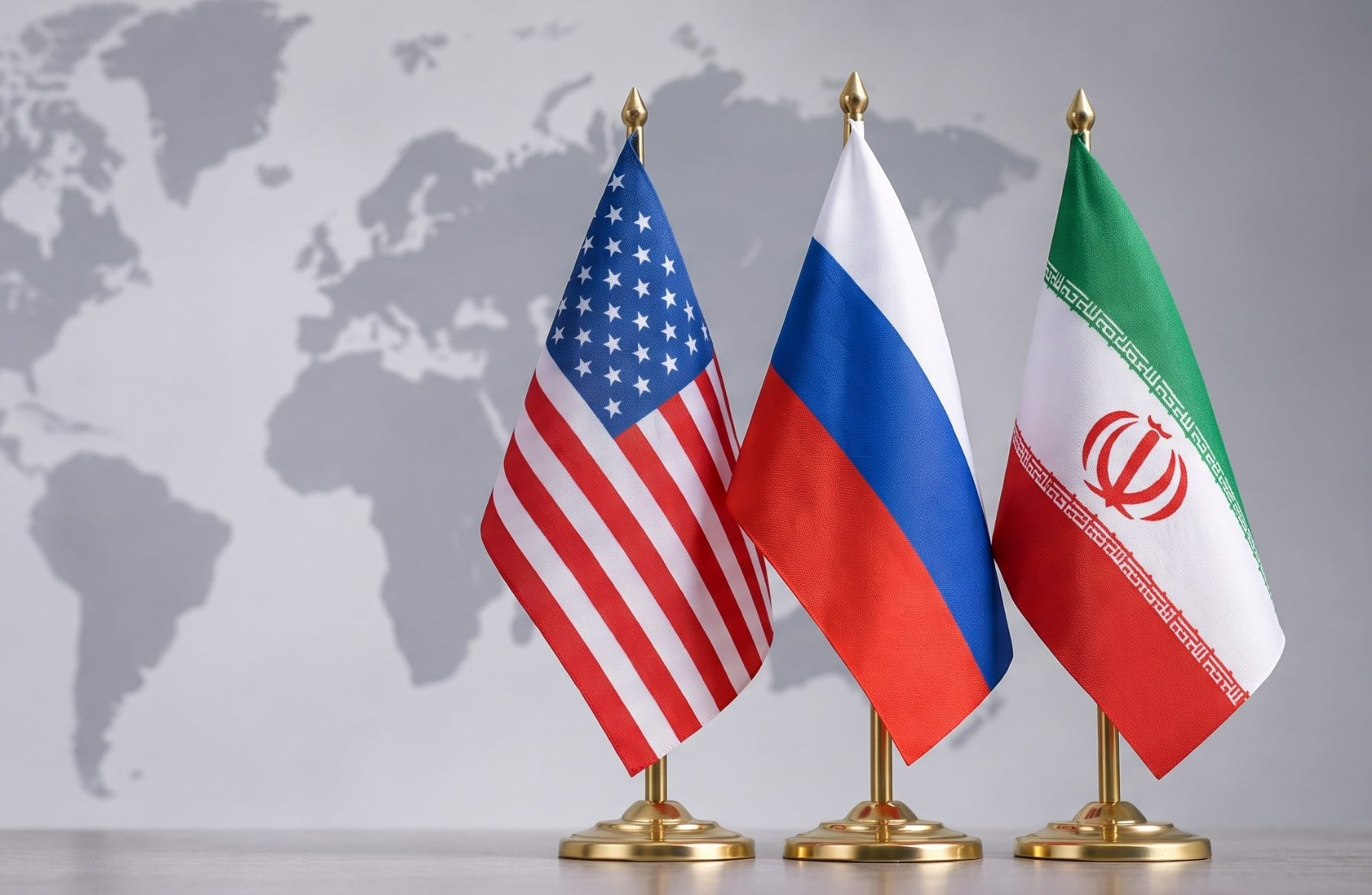
Zaviye Institute – Exclusive Translation: Recent developments indicate that Russia is seeking to play an effective role in efforts to reach an agreement between Iran and the United States and end the dispute between the two countries.
It should be noted that Moscow’s interest is not merely driven by its desire to use these efforts to improve the prospects for resolving the war in Ukraine based on its own calculations and interests. U.S. President Donald Trump also raised the possibility of reaching such an agreement on 31 October 2026, saying: “A major and comprehensive political agreement involving Iran, Russia and Ukraine will probably be reached during the G20 summit, which is scheduled to be held in Florida.”
Nevertheless, Russia’s desire to play a role in this process also reflects a broader set of strategic interests that play a decisive role in shaping Moscow’s policy toward developments in the dispute between Iran and the United States. Below are Moscow’s motivations for ending the war between Iran and the United States.
Russia’s Role in an Iran-U.S. Agreement
On 10 October 2026, Russian President Vladimir Putin announced that during a telephone conversation he had conveyed Iran’s position on the negotiations to U.S. President Donald Trump. These remarks followed Putin’s meeting with Iranian President Masoud Pezeshkian on the sidelines of the summit of the Commonwealth of Independent States and the Caspian Sea Environmental Summit in Turkmenistan. During the meeting, Putin expressed his willingness to participate in mediation efforts between Tehran and Washington and reiterated Russia’s readiness to receive Iran’s enriched uranium if the two sides reached an agreement in the coming period.
This indicates that Russia is seeking a role similar to the one it played in the nuclear agreement reached between Iran and the 1+5 group, known as the “JCPOA,” on 14 July 2015. That agreement envisaged the transfer of most of Iran’s enriched uranium to Russia. Now, too, following U.S. President Donald Trump’s withdrawal from the nuclear agreement on 8 May 2018, Tehran remains doubtful about the possibility of reaching a lasting agreement with the United States.
Preventing Iran’s Defeat
In Russia’s view, a diplomatic failure to end the war between Iran and the United States could prompt Washington to launch another round of military operations, possibly in cooperation with Israel. For Moscow, Iran’s defeat would have consequences extending beyond the loss of another allied government. Russia is also concerned about the potentially negative consequences for security and stability in Central Asia and the Caucasus, regions bordering Russia. Given that Moscow remains engaged in the war in Ukraine, instability in these areas could have adverse consequences for Russia’s own domestic stability.
Expanding Bilateral Economic Cooperation
Examining ways to implement the strategic partnership treaty signed by the two countries on 17 January 2025 was one of the main items on the agenda during Pezeshkian’s visit to Moscow and Lavrov’s visit to Tehran. This issue is of particular importance to Tehran, as it relies on relations with neighboring countries to contain the consequences of the 2026 blockade of ports in the Persian Gulf. From Tehran’s perspective, its land borders with neighboring countries could help it withstand pressure resulting from the United States’ blockade and consequently prolong the current confrontation in a manner contrary to President Donald Trump’s interests and calculations.
Read more: The Future of Iran-Russia Relations Amid the Possible Rapprochement between Moscow and Washington
According to Iranian data, the volume of cargo transported through the North-South Corridor between January and September 2026 reached 8.9 million tons. In addition, cargo traffic through the corridors increased by approximately 87 percent during the first four months of 2026, while grain transit through Astara quadrupled in the first half of the year. Although Russia is seeking to strengthen the role of these corridors in developing bilateral relations with Tehran, Moscow also believes that helping improve the prospects for an agreement between Iran and the United States could strengthen these relations, particularly because such an agreement would include the lifting of sanctions imposed on Iran.
In fact, from Moscow’s perspective, an Iran-U.S. agreement could, by reducing sanctions pressure, create the conditions for expanding economic cooperation and developing the North-South Corridor.
Strengthening Coordination in the Caucasus
Reaching an agreement to end the war between Iran and the United States could facilitate coordination between Tehran and Moscow on security and strategic issues important to both countries. These shared interests are aligned with activating the framework known as the “3+3 Platform,” whose aim is to establish a regional security dialogue in the Caucasus without foreign involvement, with the participation of Russia, Iran, Turkey, Azerbaijan, Armenia and Georgia.
Moscow and Tehran also attach particular importance to preventing the expansion of U.S. influence in the region, especially through the Zangezur Corridor. Consultations on developments in Afghanistan are another area of shared interest.
Strengthening Russia’s Role in Persian Gulf Security Arrangements
At the ninth meeting of the foreign ministers of the Gulf Cooperation Council and the Russia-GCC Strategic Dialogue on October 18, 2026, Russian Foreign Minister Sergey Lavrov called for the development of a collective security system in the Persian Gulf. This initiative indicates that Russia is seeking to strengthen its role in shaping the region’s security arrangements, which could be established after the end of the war between Iran and the United States. Consequently, security issues—including developments on the ground in Yemen as well as the Strait of Hormuz—featured prominently in Lavrov’s talks in Manama and Tehran.
Read more: Moscow’s Hidden Objectives in the Iran-US Equation
Of course, Russia’s ability to achieve the aforementioned objectives depends on Iran’s and the United States’ willingness to respond to its proposals. It also depends on Moscow’s ability to help resolve one of the main obstacles to reaching an agreement between Tehran and Washington: Iran’s stockpile of uranium enriched to 60 percent. In other words, Russia’s role in an Iran-US agreement depends on Tehran’s and Washington’s readiness to accept Moscow’s proposals, particularly regarding Iran’s enriched-uranium stockpile.
Reader comments