
The Difference between the TRIPP and Zangezur Corridors in Sovereignty, Management and Geopolitical Consequences
Are the TRIPP and Zangezur Corridors the Same Route?
 Z
Zaviye Institute: Although the TRIPP and Zangezur corridors follow an almost identical route geographically, differences in their legal arrangements, management and the role of the United States would have different implications for Iran’s national security.
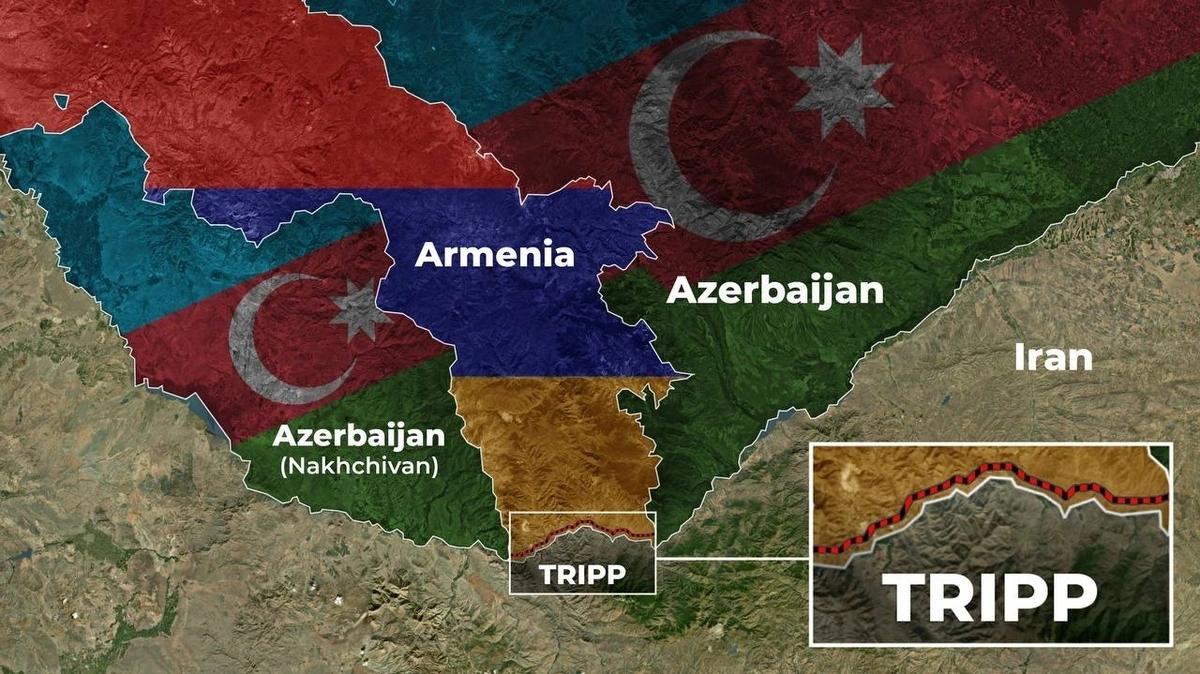
Recent developments in the South Caucasus and the agreements reached by Azerbaijan, Armenia and the United States have once again turned the issue of connecting mainland Azerbaijan to the Nakhchivan Autonomous Republic into one of the region’s major geopolitical questions. Against this backdrop, the two labels “Zangezur Corridor” and the “Trump Route for International Peace and Prosperity,” known as TRIPP, are sometimes treated as synonyms. However, a careful examination shows that although both refer to almost the same geographic area, they differ fundamentally in their legal, political and managerial arrangements.
Geographic Overlap between the TRIPP and Zangezur Corridors and Differences in the Legal Framework
First, the geographic overlap between the two schemes is undeniable. Both seek to establish a land connection between Azerbaijan and Nakhchivan via Armenia’s Syunik Province. The proposed route extends for approximately 43 kilometers and lies adjacent to the Iran–Armenia border. This sensitive location has transformed the issue from a mere transportation project into a matter linked to national security and the regional balance of power.
Read more: Trump / Zangezur Corridor: A New Power Game on Iran’s Border
Second, the fundamental difference between the two schemes concerns the concept of sovereignty. The term Zangezur, particularly in Baku’s political discourse, has been associated with demands for unimpeded passage and, at times, interpretations involving the creation of a corridor outside Armenia’s effective control. Such an interpretation has raised concerns in Yerevan and Tehran about the erosion of Armenia’s territorial sovereignty. By contrast, the TRIPP scheme, put forward following the August 8, 2025 agreement in Washington, emphasizes the preservation of Armenia’s sovereignty, territorial integrity and legal jurisdiction. Accordingly, the principal difference lies not in the geographic map, but in the legal regime and the manner in which sovereignty is exercised.
The Role of the United States in the TRIPP and Zangezur Corridors and the Shift in the Balance of Power
Third, unlike Zangezur, TRIPP has a prominent American dimension. The implementation framework published in January 2026 and the May 2026 strategic cooperation agreement have institutionalized U.S. participation in the project’s infrastructure development and economic management. The planned TRIPP Development Joint Venture, with the American side holding the majority share, indicates that Washington is not merely a political mediator but is seeking to become an economic and strategic actor in the South Caucasus. This development could affect the traditional balance of influence among Russia, Turkey and Iran.
Read more: Rewiring the South Caucasus: TRIPP and the New Geopolitics of Regional Connectivity
Fourth, the implications of this development for Iran are multidimensional. From a security perspective, the central issue is preserving the Iran–Armenia border and preventing any imposed geopolitical change. From an economic perspective, the creation of an alternative route between Azerbaijan and Nakhchivan could reduce part of Iran’s transit advantage. In addition, the possible presence of U.S.-linked security structures near Iran’s northern borders would create a sensitivity independent of the transportation issue. However, U.S. economic participation does not necessarily mean a military deployment, and distinguishing between the two is analytically essential.
Read more: “Zangezur Corridor”: Turkey’s Strategy for Shaping the Turkic World
The Long-Term Implications of the TRIPP and Zangezur Corridors for Iran’s National Security
Fifth, the long-term implications of TRIPP for Iran’s national security must be assessed beyond its potential economic benefits. The central issue is not merely the passage of a transit route through southern Armenia, but the possibility of a new geopolitical configuration emerging in the South Caucasus that could gradually diminish Iran’s strategic role. The direct connection of Azerbaijan to Nakhchivan and Turkey, reduced transit dependence of Baku on Iran, the strengthening of the Turkey–Azerbaijan connectivity axis, and the expansion of the United States’ structural influence near Iran’s northern borders together create a set of interconnected risks.
Under such circumstances, even preserving Armenia’s formal sovereignty would not necessarily prevent a shift in the balance of power to Iran’s detriment. This is particularly the case because long-term US involvement in the economic management of the region’s critical infrastructure could lay the groundwork for new strategic dependencies. From this perspective, Iran’s primary concern is not an immediate change in borders, but the possibility of a gradual erosion of its strategic depth, a decline in its regional bargaining power, and a narrowing of the country’s geopolitical options in the coming decades. Therefore, potential short-term economic benefits should not lead to insufficient attention to the structural and long-term risks of this project.
At the same time, it should not be assumed that merely changing the name of Zangezur to TRIPP would eliminate all geopolitical concerns. What matters is the actual nature of the implementation arrangements, border-monitoring mechanisms, customs rights, the manner of foreign actors’ involvement, and guarantees for the continuity of the Iran–Armenia connection. The final assessment of this project should be based on its performance and binding documents, not merely on the parties’ diplomatic rhetoric.
Conclusion
In conclusion, it must be emphasised that, despite differences in their legal and management frameworks, the Zangezur Corridor and the TRIPP plan pursue similar connectivity objectives from a geopolitical perspective. The fundamental issue for Iran is not merely the preservation of its common border with Armenia, but the long-term consequences of a shift in the balance of power in the South Caucasus. The expansion of the United States’ structural influence, the strengthening of the Turkey–Azerbaijan axis, and the gradual erosion of Iran’s transit leverage could create enduring threats to the country’s national interests and security. Accordingly, TRIPP should be assessed not only in light of economic and legal considerations, but with a focus on safeguarding Iran’s geopolitical position and long-term strategic security.
Reader comments