
The Launch of the TRIPP Project in Armenia
The Implications of TRIPP for Russia, Iran, and Turkey
 Z
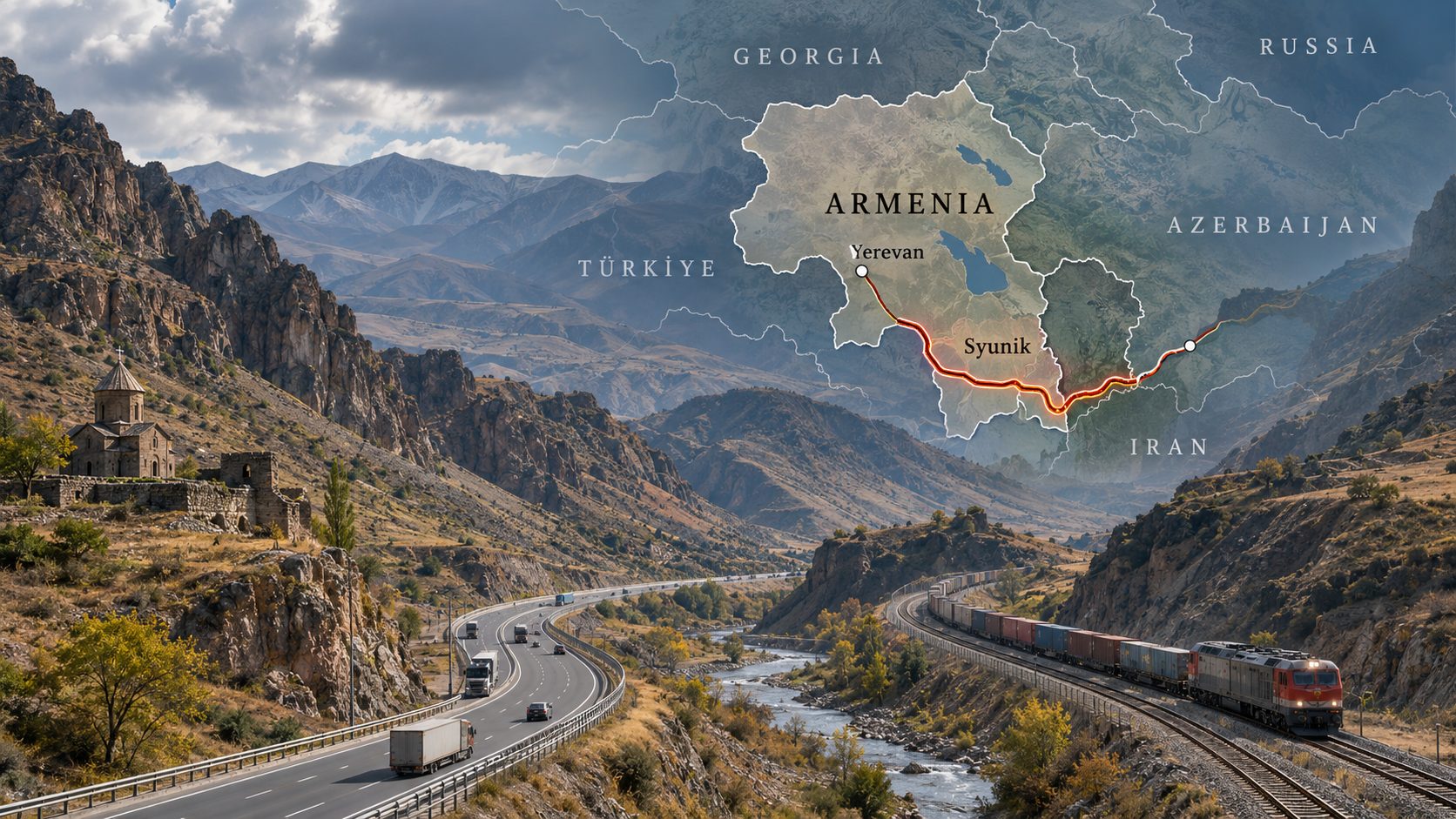
Zaviye Institute: The launch of implementation measures for the “Trump Route” project in southern Armenia, together with the possibility of accelerating the delimitation of Syunik’s borders, has ushered in a new development in the geopolitics of the South Caucasus. Pursued with the strategic participation of the United States, the project would not only connect the Republic of Azerbaijan to Nakhchivan, but could also affect the region’s transit, security and economic dynamics, bringing competition among Iran, Russia, Turkey and the United States over Eurasian communication routes into a new phase.
The Trump Route Moves from Political Agreement to Implementation
The “Trump Route for International Peace and Prosperity,” known as TRIPP, has entered the design and implementation-preparation phase following months of negotiations between Yerevan and Washington. On November 2, 2026 (11 Aban 1405), Armenian Prime Minister Nikol Pashinyan announced that his government would begin designing the railway, highway and electricity-transmission networks without waiting for the establishment of the project development company.
The decision followed the Armenian parliament’s approval of the Armenia–United States strategic agreement in Yerevan on October 28, 2026 (6 Aban 1405); the agreement passed with 63 votes in favour and 32 against. Nevertheless, the project’s entry into the implementation phase does not currently mean that large-scale construction or operation of the route has begun.
The current plan includes the Nernadzor–Karchivan railway line, a road and electricity-transmission lines; however, the construction of oil and gas transmission lines has not yet been finalised and will be the subject of future negotiations. Pashinyan has stressed that the project could provide the basis for Armenia’s emergence from its three-decade communications impasse and its simultaneous connection to the east–west and north–south networks.
Syunik: Border Delimitation in the Service of Project Acceleration
One of the most important new developments is the possibility that the delimitation and demarcation of the Armenian–Azerbaijani border in Syunik Province will be prioritised.
Armenian Deputy Prime Minister Mher Grigoryan announced on November 2 that sections related to TRIPP infrastructure might be delimited outside the normal sequence and with greater urgency. The aim is to create the legal and technical conditions for construction operations.
Nevertheless, no definitive agreement has yet been reached on the timing and scope of the next stage of border delimitation. This indicates that the project’s progress will depend not only on investment, but also on resolving border disputes and reaching implementing agreements between Baku and Yerevan.
America’s 74 Percent Stake and the Question of Armenian Sovereignty
Under the approved agreement, the TRIPP development company is envisaged as being established with a 74 percent stake for the American side and a 26 percent stake for Armenia for an initial 49-year period. If the cooperation is extended for another 50 years, Armenia’s share will increase to 49 percent.
This structure creates a long-term role for the United States in developing and managing the region’s communications infrastructure, although Armenian officials stress that their country’s sovereignty and legal jurisdiction will remain intact.
Edward Hakobyan, head of Armenia’s State Revenue Committee, has also stressed that customs supervision, risk assessment and decisions regarding cargo inspections will remain exclusively in the hands of Armenian officials, while the international operator will provide only limited operational services.
Geopolitical Implications: From Washington to Moscow and Ankara
The significance of the Trump Route extends beyond the territorial connection between the Republic of Azerbaijan and Nakhchivan. The project could create a new link in the Middle Corridor and facilitate trade between Central Asia, Turkey and Europe.
For Turkey and the Republic of Azerbaijan, activation of the route would mean greater connectivity options and reduced dependence on certain alternative routes. For the United States, participation in Syunik’s critical infrastructure would provide a means of strengthening its economic and political presence in the South Caucasus.
Despite its diminished exclusive role in managing regional developments, Russia still retains economic and infrastructural levers. On October 15, 2026 (23 Mehr 1405), Russian Foreign Minister Sergey Lavrov announced Moscow’s readiness to participate in connectivity projects in the Caucasus. However, some Russian security officials have expressed concern about the potential implications of the US presence.
Iran: Transit Opportunity or Strategic Challenge?
For Iran, the most important issues are preserving the common border with Armenia, preventing geopolitical changes and safeguarding its transit position in north–south connectivity.
Iran’s ambassador to Armenia stated in September 2026 (Shahrivar 1405) that Tehran distinguishes between the earlier “Zangezur Corridor” proposal and the current structure of TRIPP, and emphasises the preservation of Armenia’s territorial integrity and sovereignty.
From a strategic perspective, the new route does not necessarily mean Iran’s exclusion from the region’s transit network; however, it could intensify competition over cargo and energy transportation routes. Its impact on Iran’s interests will depend on the final structure for managing the route, tariffs, reciprocal access and the possibility of connecting Iranian infrastructure.
Read more: Trump Corridor: A Transit Opportunity or a Geopolitical Threat to Iran?
Outlook: Syunik and the Future of the Regional Order
The overall developments indicate that the South Caucasus is moving towards a connectivity-based order involving multiple actors. However, border disputes, ambiguity over reciprocal transit rights, and the failure to finalise the implementation details remain among the obstacles facing the project.
Overall, the strategic significance of TRIPP lies in its potential to alter power relations and manage critical infrastructure in the South Caucasus. For Iran, maintaining transit links with Armenia and actively participating in the region’s connectivity networks could play a decisive role in managing the consequences of this transformation.
Further reading: Is the TRIPP Project Giving Birth to a New Order in the South Caucasus?!
Reader comments