
The Region’s Geopolitical Reconfiguration Under the Pressure of U.S. Sanctions
South Caucasus Under the Shadow of Iran Sanctions: Reconfiguring the Geography of Power
 H
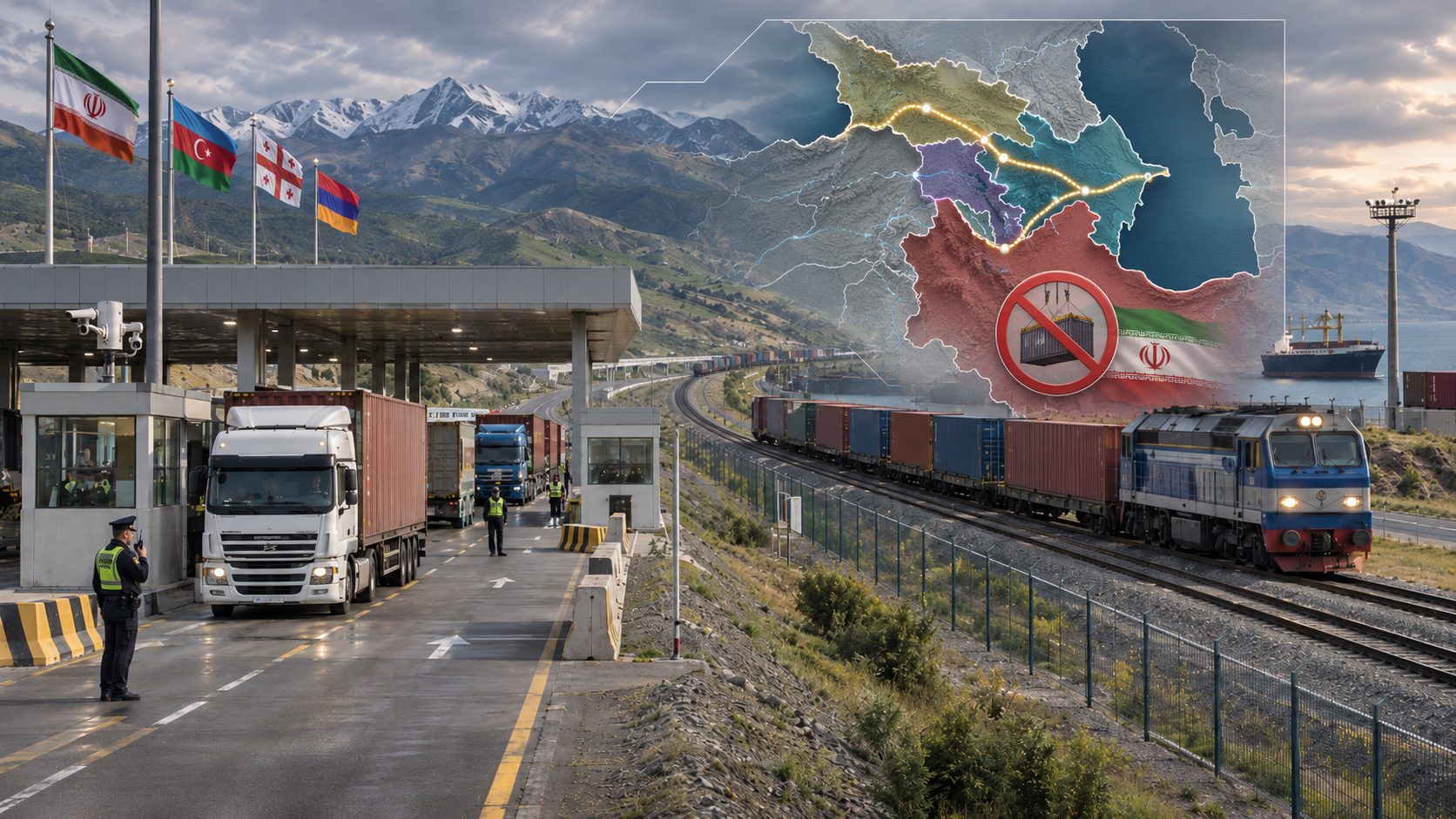
Zaviye Institute: Analyses of the effects of sanctions on Iran have often focused on their domestic economic consequences, while these restrictions have also affected the geopolitical balance and transit routes of the South Caucasus. The decline in oil-export capacity, restricted access to the international banking system, and the deterioration of the transport fleet are among the common themes of these analyses. However, another dimension also merits attention: the impact of these restrictions on the geopolitical structure of neighbouring regions. In recent years, the South Caucasus has become a clear example of this effect.
Pressure on Iran’s southern ports, rail network and aviation sector has led part of the flow of goods and the associated risks to shift towards northern and western routes. As a result, the positions of Azerbaijan, Armenia and Georgia in transit calculations have gained importance. This article seeks to show how the United States’ multilayered sanctions have affected not only Iran but have also inadvertently increased the geoeconomic value of the South Caucasus, turning the region into an arena where the interests of major powers collide.
The Concept of the Geographical Transfer of Sanctions Pressure
To understand this transformation, a three-stage model can be used. In the first stage, direct pressure is applied to Iran’s transport infrastructure. The maritime blockade of the southern ports, which began this spring and intensified in the following months, seriously impeded oil exports. Official CENTCOM reports indicate that this restriction has prevented the export of more than $25 billion worth of crude oil. At the same time, extensive sanctions on Iranian railway companies and airlines made the movement of goods and passengers along traditional routes more difficult.
In the second stage, economic actors and governments seek alternative routes. The transfer of part of the cargo to the Caspian Sea, increased traffic through the northern land borders, and greater attention to the North–South Corridor are among the responses observed. Shipping data indicate that the number of Russian vessels in Iran’s northern ports increased in the months following the intensification of the southern restrictions, while the volume of transit via the Caspian route grew significantly.
The third stage is the absorption of this pressure by the geography of the Caucasus. Rail and road routes passing through Azerbaijan, Armenia and Georgia, as well as the Caspian ports, are inevitably taking on part of the cargo and risks arising from the restrictions on Iran. As a result, the geographical position of these countries is transformed from a fixed asset into a variable with added value.
US Land, Maritime and Air Sanctions against Iran
US measures over the past year have been multilayered. The maritime blockade of the southern ports began in March and continued through the summer with an extensive naval presence. In November, the United States Central Command announced the formation of a task force called Iron Gate, whose mission is to monitor the transfer of sanctioned goods across land borders and the Caspian Sea. This measure indicates that, after exerting pressure on the southern routes, Washington has also turned its attention to alternative northern routes.
Read more: Why Is the US Iron Gate Bound to Fail?
In the rail sector, several major components of Iran’s railway network were also sanctioned in October. The US Department of the Treasury described this measure as part of an economic exclusion operation and stressed that, with restrictions on maritime routes, the importance of land corridors has increased. In the aviation sector, more than 27 Iranian airlines and dozens of related entities were sanctioned in August. This measure constrained the air fleet and reduced international flights.
Turning the Caucasus into a Region Absorbing the Sanctions Shock
The practical result of these restrictions has been an increase in the geopolitical weight of the South Caucasus. The North–South Corridor, which connects Iran, Russia and India, has witnessed renewed activity in recent months. The completion of missing links such as the Rasht–Astara railway and the development of routes passing through Armenia to Georgia and the Black Sea have been placed on the agenda. At the same time, competition between east–west and north–south routes has intensified. The Middle Corridor, which passes through Central Asia, the Caspian Sea, Azerbaijan and Georgia, and the new proposed routes through Armenian territory are both benefiting from the competitive environment that has emerged.
The Caspian Sea has also acquired new importance. Increased commercial shipping between Iranian and Russian ports and growing attention to the transit capacity of this body of water indicate that the southern restrictions have shifted part of the trade flow northward. At the same time, the announcement of US monitoring of this route has increased insurance costs and perceived risk for economic actors, itself becoming a factor in the rearrangement of logistics networks.
These developments have transformed the Caucasus from a relatively peripheral region into an arena where the interests of the United States, Russia, Turkey, Iran, the European Union and China collide. Any actor capable of controlling or facilitating the routes passing through this region will benefit from the increased value of its geographical position.
Geopolitical and Geoeconomic Consequences for the Caucasus
From a geoeconomic perspective, sanctions have turned the Caucasus’s geographical position into a tradable commodity. Previously, goods passed through routes; now the route itself and the possibility of accessing it have become subjects of competition and bargaining. Azerbaijan is benefiting from this new environment through the development of rail and port infrastructure, Armenia by pursuing alternative routes toward Georgia, and Georgia through its position as a link to the Black Sea. The increase in foreign investment in the region’s transit projects and competition among various corridor plans demonstrate this transformation.
From a geopolitical perspective, the Caucasus has also become a region of power intermediation. Restrictions imposed on Iran and Russia have increased the incentive to create alternative routes under Western influence, while simultaneously compelling Tehran and Moscow to strengthen cooperation along the International North–South Transport Corridor. This duality of competition and interdependence has further complicated the region’s equations.
Read more: Nakhchivan Foreign Trade: Iran’s Strategic Imperatives in the Zangezur Scenario
Conclusion
The most important geopolitical consequence of the United States’ multilayered sanctions against Iran should be sought in the South Caucasus. Pressure on Iran’s transport infrastructure has evolved into a process of reshaping the geography of power in the region. The South Caucasus is now not only a transit route for goods but also an arena for the redistribution of risks and opportunities arising from sanctions-related restrictions. This transformation demonstrates that economic instruments can produce unforeseen geographical consequences and turn neighbouring regions into key actors in new configurations.
Overall, in addition to constraining Iran’s economic and transit capacities, the sanctions against Iran have led to the reconfiguration of trade routes and increased the geoeconomic importance of the South Caucasus.
Reader comments