
The Strategic Implications of the United States’ Presence in the South Caucasus
Syunik Corridor: A New Challenge for Iran
 H
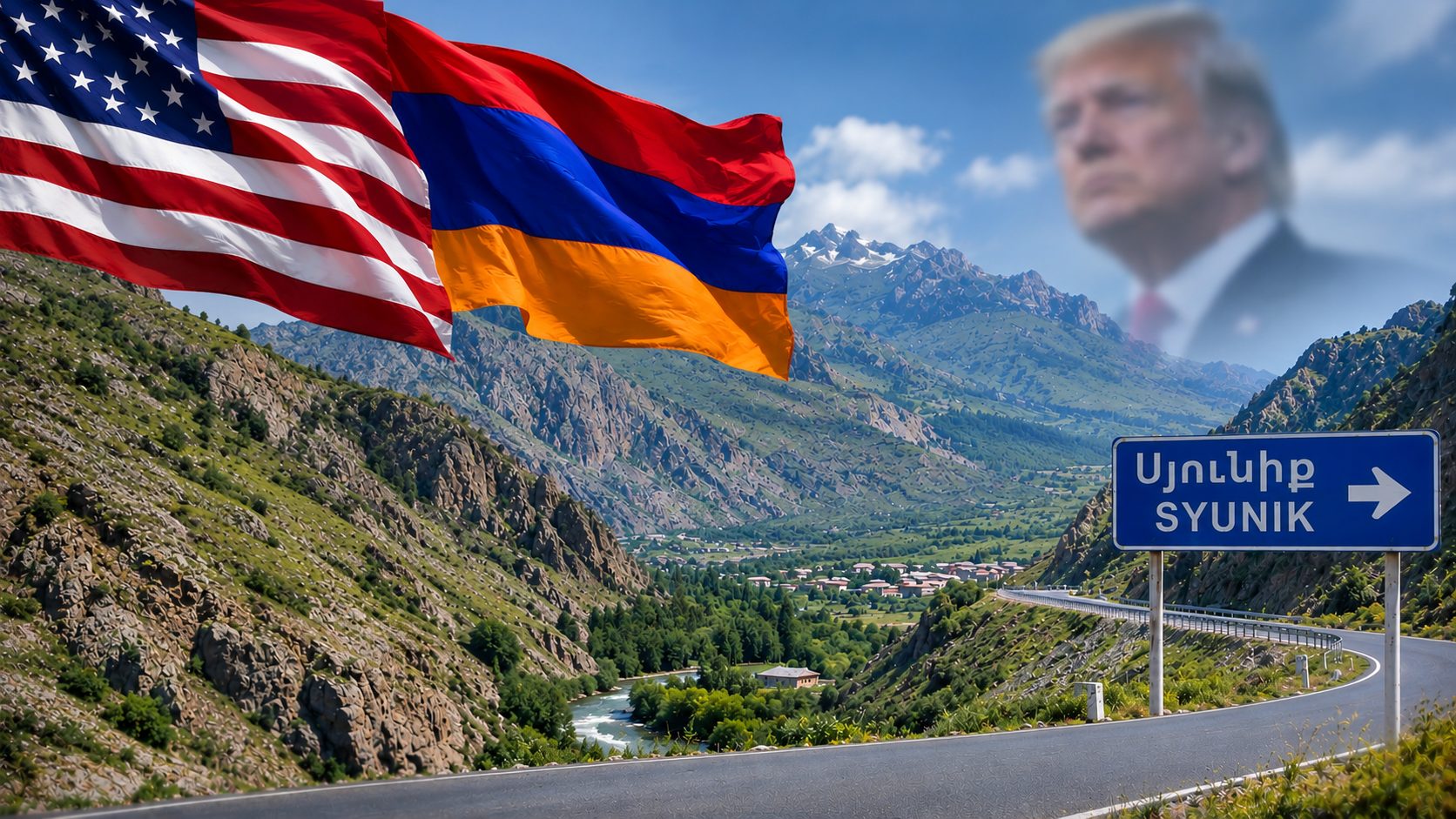
Zaviye Institute: Recent developments in the South Caucasus—particularly the ratification by the Yerevan parliament of the Strategic Partnership Charter between Armenia and the United States in the final days of October 2026, and the announcement that the design of the Syunik route’s infrastructure has begun—have been among the political issues attracting attention in recent weeks.
This route, known within the framework of previous agreements as the Trump Route for International Peace and Prosperity, runs through Syunik Province in southern Armenia and is intended to establish a land connection between the Republic of Azerbaijan and Nakhchivan. Its significance derives not merely from several dozen kilometres of road and railway, but from the position this project has acquired in the reconfiguration of the transit order and balance of power in the Caucasus.
Read more: Syunik at the Center of the South Caucasus’ Geopolitical Competition
Following the Karabakh wars, Armenia has concluded that reliance solely on traditional security guarantees, particularly those provided by Russia, is no longer sufficient. In practice, the government of Nikol Pashinyan has transformed Syunik from a vulnerable border region into a geo-economic asset. Armenia’s sovereignty over this route will be preserved, but the presence and interests of the United States, Turkey, Azerbaijan and, to some extent, Europe will become tied to it. Consequently, any threat to the route will impose high political and economic costs on regional actors. From this perspective, Armenia views the Syunik route less as a corridor than as a form of geopolitical insurance—insurance that secures its interests not through a classic military alliance, but through economic and transit interdependence.
This development has clear geostrategic implications. If the route becomes the principal east–west artery in the South Caucasus, the role of Iran’s short border with Armenia, which is approximately 44 kilometres long, will diminish in transit calculations. Turkey will gain the possibility of a more direct connection to Central Asia and the Turkic-speaking world. Russia will lose part of its traditional leverage in the Caucasus, while the United States will, for the first time, acquire a direct position in the region’s transit architecture. Recent reactions by Iranian officials, including warnings by Ali Akbar Velayati and statements by members of parliament, should be understood in this context—not as opposition to a few kilometres of road, but as concern over a shift in the regional balance of power and a reduction in Iran’s geostrategic weight in the northwest.
At the geo-economic level, the principal competition is taking shape between two transit models. Iran has invested political and economic capital in developing the North–South Corridor for years and regards it as the axis connecting the Persian Gulf to the Caucasus and Russia. The Syunik route, however, could divert some of the trade flows between Turkey, the Caucasus and Central Asia away from Iranian territory and increase the economic value of Syunik Province as a communications hub.
Further reading: Examining the Hidden Dimensions of the Trump Route’s Challenges for Iran at a Specialized Zaviye Institute Session
This competition is less between Iran and Armenia than between two different regional configurations: one centered on the North–South axis and the other on the East–West axis, in which Turkey and Azerbaijan play central roles. The success of the Syunik route could affect the comparative advantage of some transit routes passing through Iran, although experience has shown that transit networks generally complement one another rather than fully replace one another.
Armenia is sending multilayered messages in this context. To Russia, it is saying that Russia is no longer the sole guarantor of its security. To the West and Turkey, it is declaring that it is ready to integrate into the new regional order. And to Iran, it is conveying that it understands the objections but will not change its strategic course. This conduct can be viewed as a form of multilateral balancing, in which security is ensured through the interweaving of the economic interests of major actors, rather than through unilateral military dependence.
These developments are also connected to the broader context of tensions between Iran and the United States. At a time when indirect pressure around Iran continues, U.S.-backed transit infrastructure in the country’s northern neighborhood could, in the future, acquire functions extending beyond trade. From Tehran’s perspective, any network formed with American involvement and management along Iran’s northern borders could potentially become an instrument of geopolitical influence, even if its declared nature is purely economic. This concern is logical, although its materialization will depend on multiple factors, including how the project is implemented, the extent of foreign forces’ physical presence, and domestic political developments in Armenia.
Read more: The Need to Obtain Binding Security Guarantees from Yerevan to Safeguard Iran’s National Interests
Another noteworthy point is that naming this route after Trump does not necessarily confine it to a particular partisan policy. Even if the balance of political forces in Washington changes, the use of infrastructure instruments, supply chains and transit arrangements could continue as a lower-cost means of maintaining a presence in Eurasia.
Reader comments