
The Future of the Ukraine War in the Shadow of US Mediation
Abu Dhabi Talks: Will the Ukraine War End?
 B
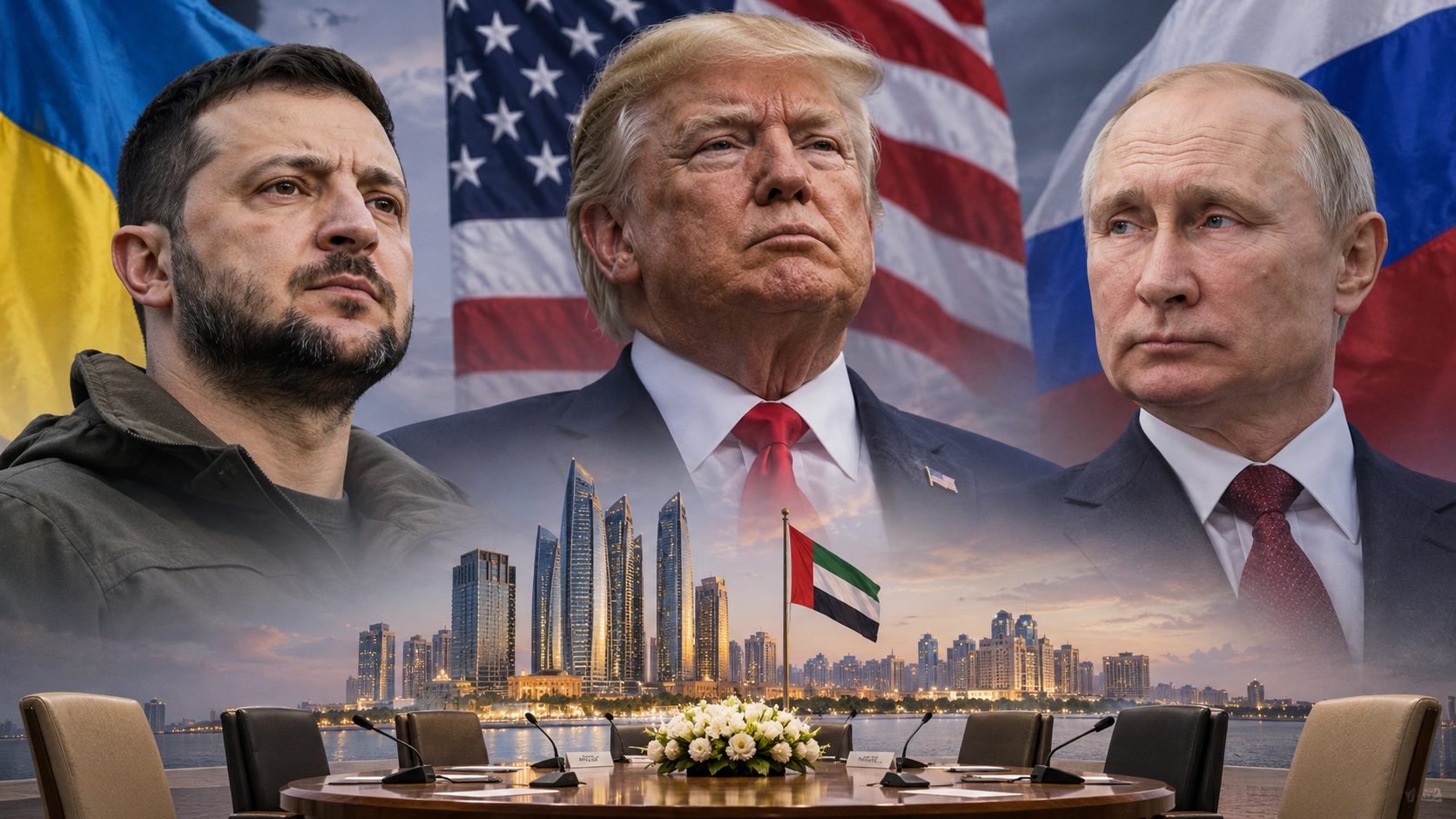
Zaviye Institute: The trilateral talks between Russia, Ukraine and the United States, scheduled to be held in Abu Dhabi on November 10 and 11, 2026 (19 and 20 Aban 1405), could mark a new stage in diplomatic efforts to end the war in Ukraine. Nevertheless, fundamental differences over territory, security guarantees and the future of Europe’s security order continue to make the achievement of lasting peace difficult.
Abu Dhabi: The Return of Diplomacy Amid the Continuation of the War
The announcement of trilateral talks between Russia, Ukraine and the United States in Abu Dhabi signals Washington’s effort to shift the conflict from the battlefield to the political bargaining table. Steve Witkoff, Donald Trump’s special envoy, has announced that the talks will focus on postwar security arrangements, de-escalation, humanitarian issues and a path toward peace. The potential participation of Witkoff and Jared Kushner indicates that the White House is seeking to manage the negotiating process directly.
Read more: Understanding Trump’s Shift in Position on the Russia-Ukraine War
However, the significance of the Abu Dhabi meeting lies less in the possibility of an immediate agreement than in assessing the parties’ readiness to accept compromise. Previous negotiations have shown that the opening of talks does not necessarily mean that strategic differences will diminish.
The Battlefield: An Instrument of Pressure at the Negotiating Table
Recent developments on the battlefronts show that neither side yet has sufficient incentive to retreat from its core demands. By continuing operations in Donetsk and targeting Ukraine’s energy infrastructure, Russia is seeking to strengthen its bargaining position. Ukraine, by contrast, is attempting to raise the cost of continuing the war for Moscow through drone attacks on Russian oil facilities and resistance along operational axes.
The Institute for the Study of War’s assessment of developments in late October 2026 (Aban 1405) also indicates that Russia’s advances have been limited and that its forces continue to face heavy operational costs. The battlefield situation therefore reflects mutual attrition more than a decisive victory for either side.
The approach of winter also increases the importance of the talks, as attacks on energy infrastructure could intensify economic, social and humanitarian pressure on Ukraine.
Washington’s Calculations: Peace or Crisis Management?
The Trump administration is seeking to take control of the diplomatic initiative through direct mediation. On the one hand, Washington wants to reduce the costs of continuing the war; on the other, it is concerned about the security consequences for Europe of a fragile agreement.
The holding of preliminary U.S. meetings with representatives of France, Germany, the United Kingdom, the European Union and NATO in Brussels indicates that the issue is not merely the cessation of the war; the design of Europe’s future security arrangements is also on the agenda.
Nevertheless, increased U.S. pressure on Kyiv to accept an agreement could create divisions among Washington, Ukraine and its European allies. An agreement reached without credible security guarantees could lead to a temporary halt in hostilities rather than lasting peace.
Moscow and Kyiv’s Red Lines
The most important obstacle to the talks is disagreement over the occupied territories and security guarantees. Russia seeks to consolidate its territorial gains and limit Ukraine’s military and security capabilities, while Kyiv insists on preserving national sovereignty, independent defense capabilities and receiving credible guarantees.
Zelenskyy’s recent statements opposing the imposition of neutrality or restrictions on the Ukrainian army indicate that the distance between the parties remains considerable.
Under such circumstances, an agreement on limited measures—such as prisoner exchanges, reducing attacks on energy infrastructure or localized ceasefires—is assessed as more likely than the immediate achievement of a comprehensive agreement.
The United Arab Emirates: An Emerging Mediator in Great-Power Diplomacy
The choice of Abu Dhabi also carries a geopolitical message. By maintaining economic and political relations with Russia, strategic cooperation with the United States and diplomatic contacts with Ukraine, the United Arab Emirates has created the capacity to host sensitive talks.
This role reflects Abu Dhabi’s effort to convert its economic power and international network of relations into diplomatic influence. The relative success of the talks could strengthen the UAE’s position as a mediating actor in extra-regional crises.
Three Scenarios and the Strategic Implications for Iran
In the first scenario, the talks lead to a limited agreement on humanitarian issues and de-escalation—an option that is more likely given the existing differences.
In the second scenario, a phased agreement encompassing a ceasefire, a monitoring mechanism and security talks takes shape. Achieving this outcome would require significant flexibility from both sides.
The third scenario, is the failure of the talks and an intensification of the war of attrition, which could create new economic and security pressures.
For Iran, the outcome of the negotiations will affect its strategic relations with Russia, the energy market, and Eurasia’s transit routes. A reduction in tensions could lessen some of Moscow’s dependence on non-Western partners; conversely, the continuation of the war will preserve the importance of economic and transit cooperation between Iran and Russia.
Overall, the Abu Dhabi meeting should be viewed as a test of the possibility of moving from a war of attrition to phased diplomacy. Its true success will be measured not by the issuance of a political statement, but by the establishment of implementation mechanisms, security guarantees, and a lasting reduction in violence.
Reader comments