
Turkey’s Expanding Anti-Submarine Capabilities and Tel Aviv’s Concerns
Turkey’s Anti-Submarine Drones: A New Threat to Israel
 A
Zaviye Institute: One of the achievements of the Justice and Development Party and the Erdoğan government, particularly since 2014, has been to transform Turkey into one of the region’s and the world’s major producers and developers of inexpensive, high-capability military drones.
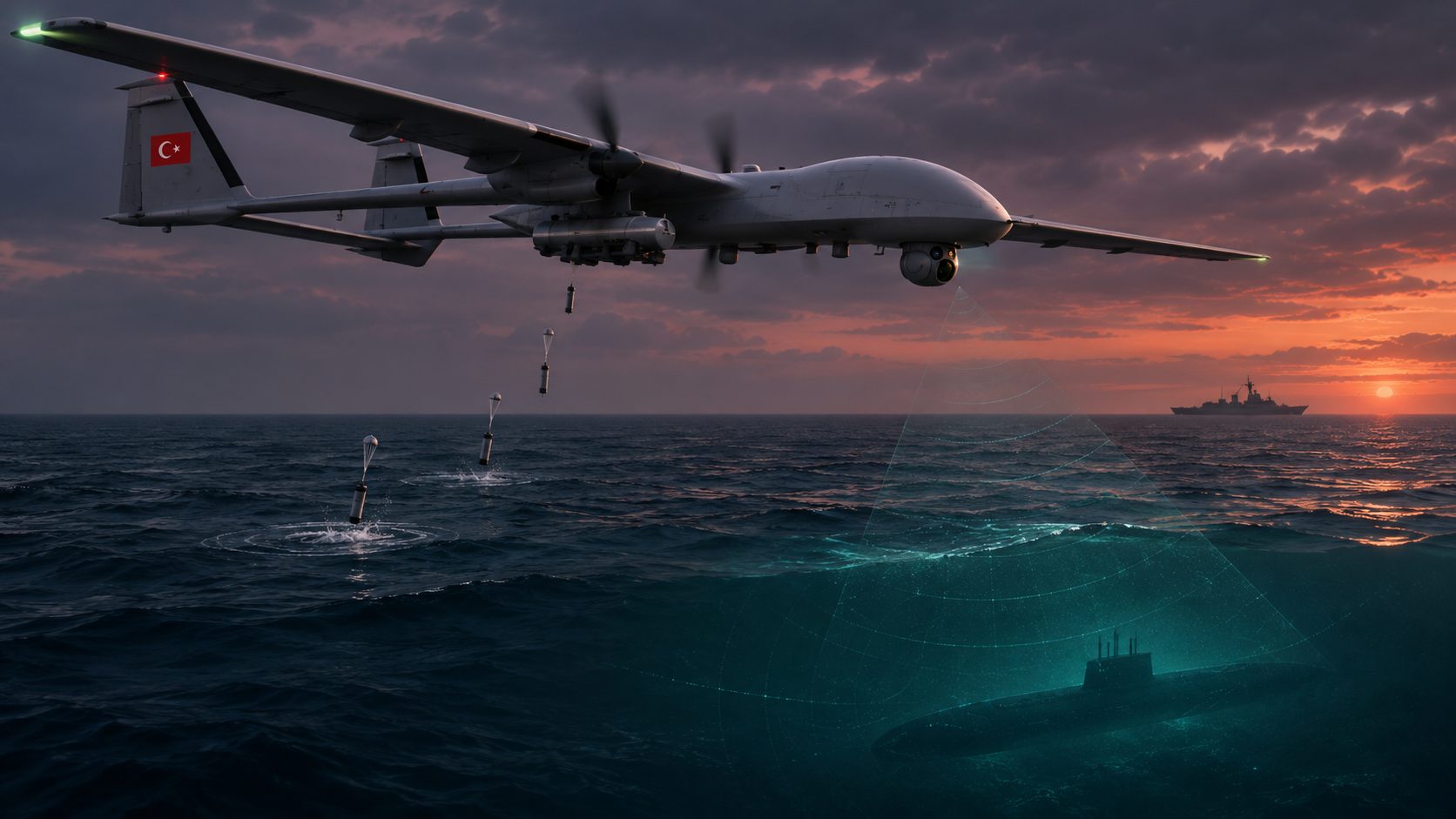
When Western military-industry stakeholders and drone-manufacturing giants decided to prevent Turkey from acquiring drone-production and -operation technologies by failing to honor their obligations under military contracts with Ankara, they never imagined that, after a relatively short period and in accordance with Erdoğan’s secret directive, the country would become one of the region’s and the world’s drone-production hubs. The important point, however, is that Turkey’s leap forward in the production of various types of indigenous military drones has now reached a stage at which, according to a report by the Israeli regime’s I24 news network, its new anti-submarine drones, such as the Aksungur, have the potential to become a lethal weapon in Turkey’s hands—one that, should any form of tension arise between Turkey and Israel, could severely weaken the vulnerable navy of the Israeli regime.
Read more: The New Middle East Order at the Crossroads of a Possible Turkey–Israel War
Turkey’s Advanced Weapons: A Fire Beneath the Ashes
A brief review of the history of Israel’s intelligence community shows that, for reasons including the lack of demographic strategic depth, Israel’s external and internal intelligence services, such as Mossad and Shin Bet, confront with full force any line of thought seeking to revive Muslim glory and greatness. It must therefore be said that any military advancement in any country—including Turkey under the rule of the AKP—because of the dominance in that country of the ideology of neo-Ottomanism, which seeks to revive the glory and greatness of the Ottoman Empire, can, from the perspective of the Israeli regime’s security institutions, constitute an active threat to the occupying regime in Jerusalem. This is because such advancement not only challenges Israel’s military superiority but also threatens its demographic and ideological existence.
In this context, Turkey’s anti-submarine drones, which according to available data have been developed under the two military brands Bayraktar TB3 and the Aksungur reconnaissance drone, manufactured by TUSAŞ Aerospace Industries, and which have been designed and built since 2015 and unveiled at the Turkish Navy’s recent TURNAs exercise in 2026, will constitute one of the major military threats to Israel’s vulnerable navy. Despite possessing a coastline and multiple ports, including Acre, Haifa and Eilat, the Israeli regime has consistently suffered from the absence of a capable navy and has therefore concluded major arms contracts with exporters of naval equipment, particularly Germany, one of the world’s largest submarine manufacturers.
Read more: An Interview with Haluk Bayraktar, the World’s Largest Drone Manufacturer
For this reason, it can be said that Turkey’s new drones, such as the Bayraktar TB3, which are capable of carrying out takeoffs from and landing on aircraft carriers and conducting intelligence and reconnaissance operations against advanced submarines, together with the Aksungur strategic drone, which can fly for 24 hours and deploy multiple sonobuoys in maritime areas to detect and track various types of submarines, can easily become a fire beneath the ashes of possible future military tensions between Ankara and Tel Aviv.
Ankara’s Coup de Grâce to Israel’s Achilles’ Heel
Available field data and documentation indicate that the Israeli regime has, at various junctures—including the 2021 Battle of Saif al-Quds—suffered severe blows from the resistance front in the maritime battlespace. Accordingly, Turkey’s extensive ties with Hamas and AKP-affiliated institutions, alongside the country’s acquisition of remotely operated underwater vessels such as the ULAQ vessel, manufactured at the Sefine shipyard affiliated with Turkey’s Presidency of Defense Industries (SSB), can both enhance the maneuvering capability of Turkey’s powerful navy vis-à-vis Israel and, given Turkey’s experience in indigenizing the production of inexpensive drones, inflict the most devastating blows on the Israeli defense forces’ most important Achilles’ heel—namely, the Israeli navy. According to some available figures, this force operates with only 52 active vessels in the Mediterranean and along the shores of occupied Palestine because of its limited military capacity.
Conclusion
In the event of any further war or military tensions, the Israeli regime would likely make every effort to avoid confrontation with Turkey’s powerful navy, given its strategic weakness vis-à-vis Turkey. If Turkey were to join the Iranian front, the likelihood would be very high that Turkey’s strategic and inexpensive weaponry would destroy a substantial portion of Israel’s costly but small naval assets, particularly in view of Turkey’s historical record of tensions with the part of Cyprus supported by the Zionists and the long-term divergence of Turkish and Israeli interests in places such as Syria.
Reader comments