
The Geopolitics of Eurasia amid the Convergence of Turkic Countries
Organization of Turkic States: From Shared Identity to Regional Power
 Z
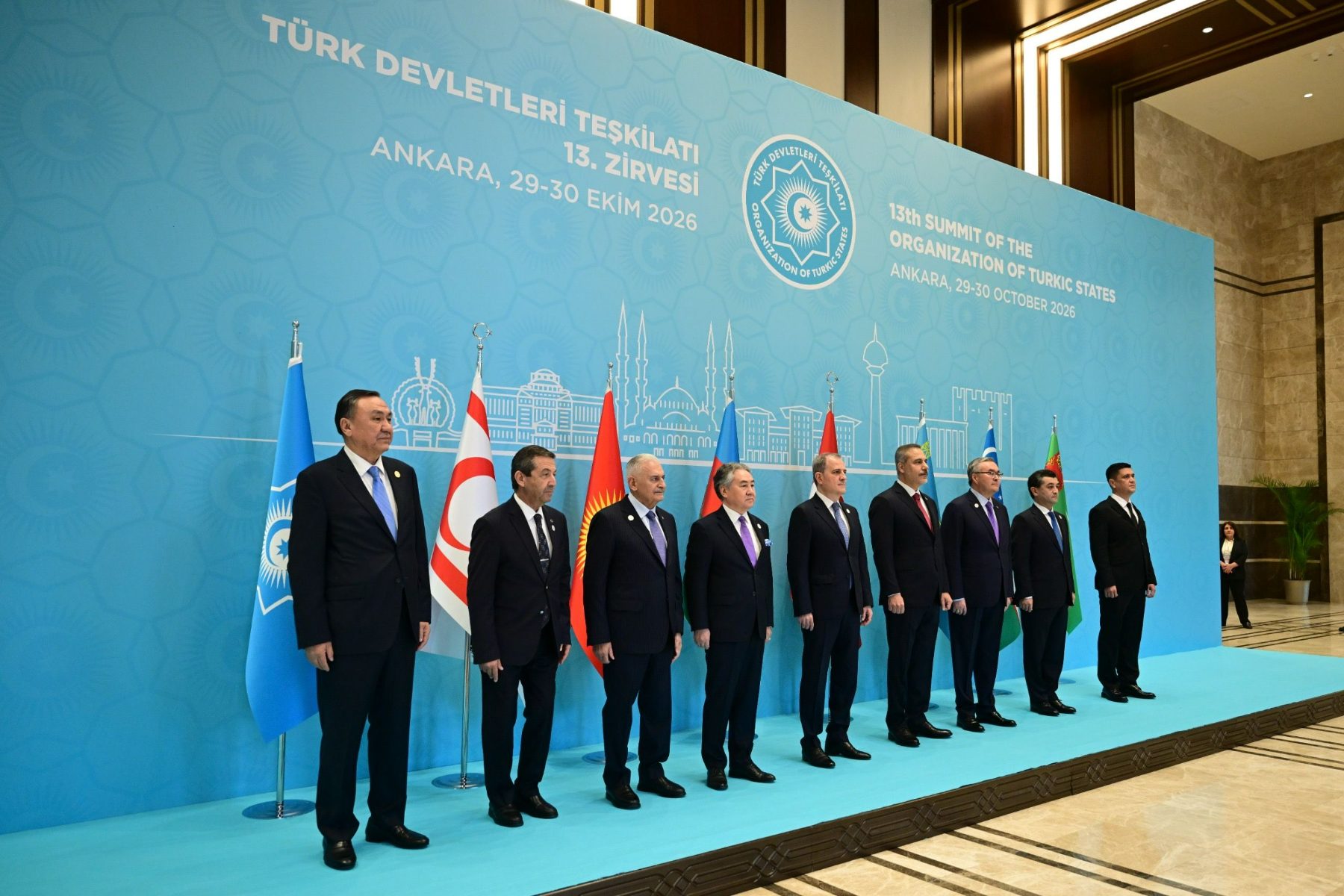
Zaviye Institute: The 13th Summit of the Organization of Turkic States in Ankara once again drew attention to the organization’s expanding position in the political and economic dynamics of Eurasia. With significant demographic, economic and geographic capacities, the organization is seeking to transform the historical and cultural ties among its members into strategic cooperation. Nevertheless, an important question arises: to what extent has the Organization of Turkic States succeeded in achieving its objectives, particularly economic development, political convergence, and contributing to regional peace and stability?
From Cultural Ties to Strategic Cooperation
The Organization of Turkic States, established in 2009 under the name Cooperation Council of Turkic-Speaking States, now has 5 full members: Türkiye, the Republic of Azerbaijan, Kazakhstan, Uzbekistan and Kyrgyzstan. Hungary, Turkmenistan and the Turkish Republic of Northern Cyprus also participate in its activities as observers.
The organization’s 13th Summit was held in Ankara on 30 October 2026 (8 Aban 1405). In addition to emphasizing cultural and linguistic commonalities, the summit focused on issues such as expanding trade, developing connectivity corridors, defense and security cooperation, and strengthening organizational structures. This shift in approach indicates that the members are seeking to move beyond symbolic cooperation and achieve tangible economic and political benefits.
The Organization’s Economic and Geopolitical Weight
The five full members of the Organization of Turkic States have a combined population of more than 160 million and a total area of approximately 4.2 million square kilometers. Their combined gross domestic product in 2025 was estimated at approximately $2.1 trillion, equivalent to nearly 2 percent of the global economy.
However, the significance of this grouping is not limited to its population or the size of its economy. The member states are located in an area that connects Central Asia, the Caucasus, the Caspian Sea and Europe. Türkiye has considerable industrial capacity and a favorable connectivity position; Kazakhstan possesses extensive energy and mineral resources; the Republic of Azerbaijan plays a role in energy transmission and transit; and Uzbekistan, with its large domestic market and growing population, has significant economic potential.
Read more: The Middle Corridor and Geopolitical Competition Along the Asia–Europe Connectivity Route
However, the pooling of these capacities within a single organization does not necessarily mean the formation of an integrated economic power. Differences in levels of development, divergent national priorities and the members’ dependence on external partners remain significant obstacles to convergence.
The Organization’s Achievements and Limitations
In recent years, the Organization of Turkic States has succeeded in providing a framework for regular political dialogue, cultural cooperation and the development of certain economic mechanisms. The establishment of the Turkic Investment Fund, with authorized capital of $600 million, and efforts to develop the Middle Corridor are among its notable initiatives.
The Middle Corridor, which connects China and Central Asia to Europe via the Caspian Sea, the Caucasus and Türkiye, is one of the most important projects supported by the members. Nevertheless, infrastructure constraints, transportation costs and customs coordination problems have prevented the full exploitation of its potential.
Therefore, although the organization has made progress in creating cooperation structures, turning political agreements into sustainable economic results remains a challenge.
Peace and Security; The Gap Between Objectives and Realities
One of the important issues in assessing the organization’s performance is the extent of its impact on regional peace and stability. The Organization of Turkic States has supported peace talks between the Republic of Azerbaijan and Armenia and expanded security cooperation among its members; however, it has so far played no independent role in resolving major regional conflicts or establishing a collective defense mechanism.
At the same time, the development of military cooperation may, in the view of its members, help strengthen security, but it could raise concerns among some neighboring states about changes in the balance of power. For this reason, the organization’s constructive role in the region depends on the transparency of its policies and its attention to the interests of neighboring countries.
The Organization’s Prospects and Iran’s Position
The future of the Organization of Turkic States will depend to a large extent on the members’ ability to overcome conflicting interests and implement joint projects. China’s economic presence, Russia’s historical influence in Central Asia, and Europe’s interests in energy and transit routes mean that the organization cannot operate independently of competition among the great powers.
Read more: Opportunities and Challenges of the Organization of Turkic States for Iran
For Iran, too, the expansion of the organization’s activities, particularly in the South Caucasus and along transit routes, is of strategic importance. The development of alternative corridors could affect Iran’s connectivity position; although economic cooperation and the development of complementary routes also create opportunities for regional engagement.
Concluding Note
Ultimately, the Organization of Turkic States has moved beyond the stage of cultural convergence, but it still has some way to go before becoming a cohesive economic and security bloc. The organization’s future will depend less on shared slogans than on the members’ ability to implement commitments, manage disputes, and strike a balance between national interests and regional cooperation. Achieving these objectives could strengthen its position in the Eurasian order; otherwise, a significant portion of the organization’s potential will remain confined to the level of political agreements.
Reader comments