
The Council on Foreign Relations’ Assessment of the Trilateral Abu Dhabi Talks
What Did the Abu Dhabi Talks Achieve—and What Did They Not?
 Z
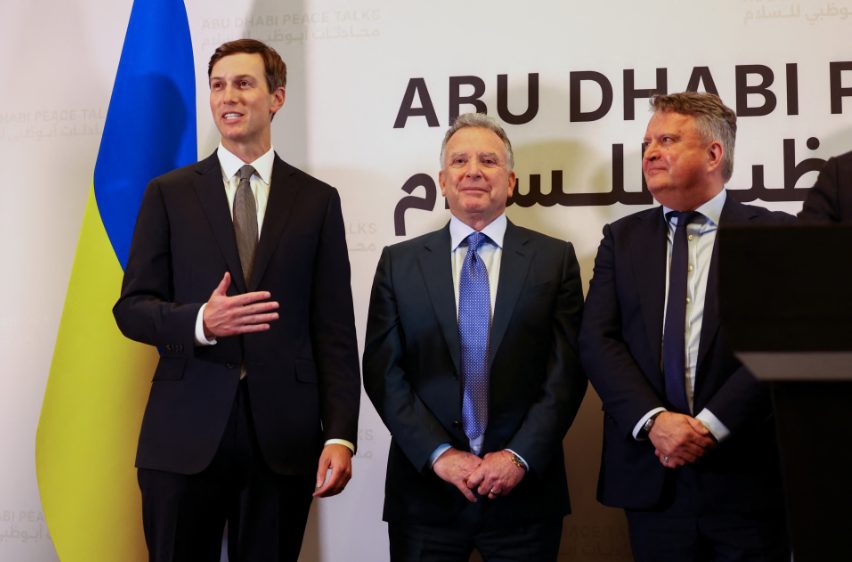
Zaviye Institute: The trilateral talks between the United States, Russia and Ukraine in Abu Dhabi ended without a meaningful agreement on a ceasefire, despite hopes of advancing the peace process. The talks, the first trilateral discussions since February, were held amid the continuation of military attacks by both sides. Their only tangible outcome was an initial agreement between Russia and Ukraine to exchange prisoners. Nevertheless, experts at the Council on Foreign Relations believe the significance of the meeting extends beyond its immediate results, as the talks have gradually shifted from the issue of halting the war in Ukraine to the broader question of Europe’s security architecture.
As part of ongoing diplomatic efforts, U.S. representatives Jared Kushner and Steve Witkoff traveled to Moscow for talks with Vladimir Putin, and discussions with Volodymyr Zelensky were also scheduled to take place. Kushner expressed cautious optimism, stating that Washington believes Russia is prepared to achieve peace under the right conditions. Vladimir Medinsky, head of the Russian delegation, meanwhile, made progress in the talks conditional on the positions of the United States, Ukraine and Europe, while emphasizing that Moscow would ultimately achieve all of its stated objectives. Zelensky, for his part, stressed the need for Ukraine to participate on an equal footing in decisions concerning the country’s future.
Read more: Abu Dhabi Talks: Will the War in Ukraine End?
Opportunities and Risks of Europe’s Entry into the Talks
Liana Fix, a senior fellow at the Council on Foreign Relations, believes Russia has succeeded in expanding the talks’ agenda from a ceasefire in Ukraine to a redefinition of Europe’s security order. On the one hand, this development could create an opportunity for Europeans to participate directly in the talks—an opportunity European countries have sought for a long time. On the other hand, broadening the scope of the talks could become a tool for delaying a ceasefire.
In Fix’s view, Moscow could prolong the negotiations by advancing broad and difficult demands concerning European security while continuing its military operations against Ukraine. Under such circumstances, Russia would have an opportunity to shift responsibility for the failure of the talks onto Europe and Ukraine. This situation could weaken the security position of European countries, particularly if the U.S. military presence in Europe were to decline.
Continuing Disagreements and Limited Prospects for Peace
Matthias Matthijs, another Council on Foreign Relations expert, emphasizes that the Abu Dhabi talks made no real progress on a ceasefire. The most significant obstacle remains Moscow’s insistence on the unilateral withdrawal of Ukrainian forces from the entire Donbas region—a demand that exposes the deep divide between the positions of the two sides.
From Europe’s perspective, discussing a new security architecture for the continent is premature as long as military attacks continue and no agreement to halt the war has been reached. Nevertheless, Kushner has proposed that the Europeans select a single representative in order to participate effectively in the talks. Otherwise, there is a risk that Washington and Moscow could make decisions about the future of European security without the direct participation of European countries.
Matthijs warns that if the United States does not change its current policy and exert greater pressure on Russia, the war could continue for the next two years.
Read more: The War in Ukraine: Russia Remains Resilient, Europe in a War of Attrition
Pressure on Russia: A شرط for Progress in the Talks
Max Boot, a senior fellow for national security studies, offers a more critical assessment. He believes Putin has no genuine desire to end the war and hopes that continued military operations will wear down Ukrainian resistance and Western support.
In Boot’s view, talks held without increasing pressure on the Kremlin will not only fail to contribute to peace but could also grant Russia greater political legitimacy. He also warns that agreeing to discuss the reconstruction of Europe’s security architecture could create an opening for Russia to advance demands aimed at restricting the position of Eastern European countries within NATO. In his view, the Trump administration must increase its support for Ukraine and raise the costs of continuing the war for Moscow in order to achieve peace.
A Middle Ground: A Framework Agreement Before Peace
In contrast to this critical approach, Thomas Graham emphasizes the need to preserve the diplomatic track. He believes that, given the deep disagreements over disputed territories and security guarantees, it is unrealistic to expect a rapid agreement.
Graham proposes that the parties first agree on the general principles of the future security order and defer the completion of its details until after a ceasefire has been established. Such a framework agreement could offer a compromise between Europe’s position, which regards ending the war as a prerequisite for security negotiations, and Russia’s position, which treats the resolution of security issues as a precondition for a ceasefire.
Overall, the assessments of Council on Foreign Relations experts indicate that the Abu Dhabi talks have become less a step toward peace than an arena for competition over shaping Europe’s future security order. The main disagreement among the experts concerns how to overcome the deadlock: increasing pressure on Russia or developing a diplomatic framework capable of linking a ceasefire to long-term security agreements.
Reader comments