
Brookings Analysis of the Shifting Balance of Power among the United States, China and Russia
America’s Lost Advantage in the Strategic Triangle
 P
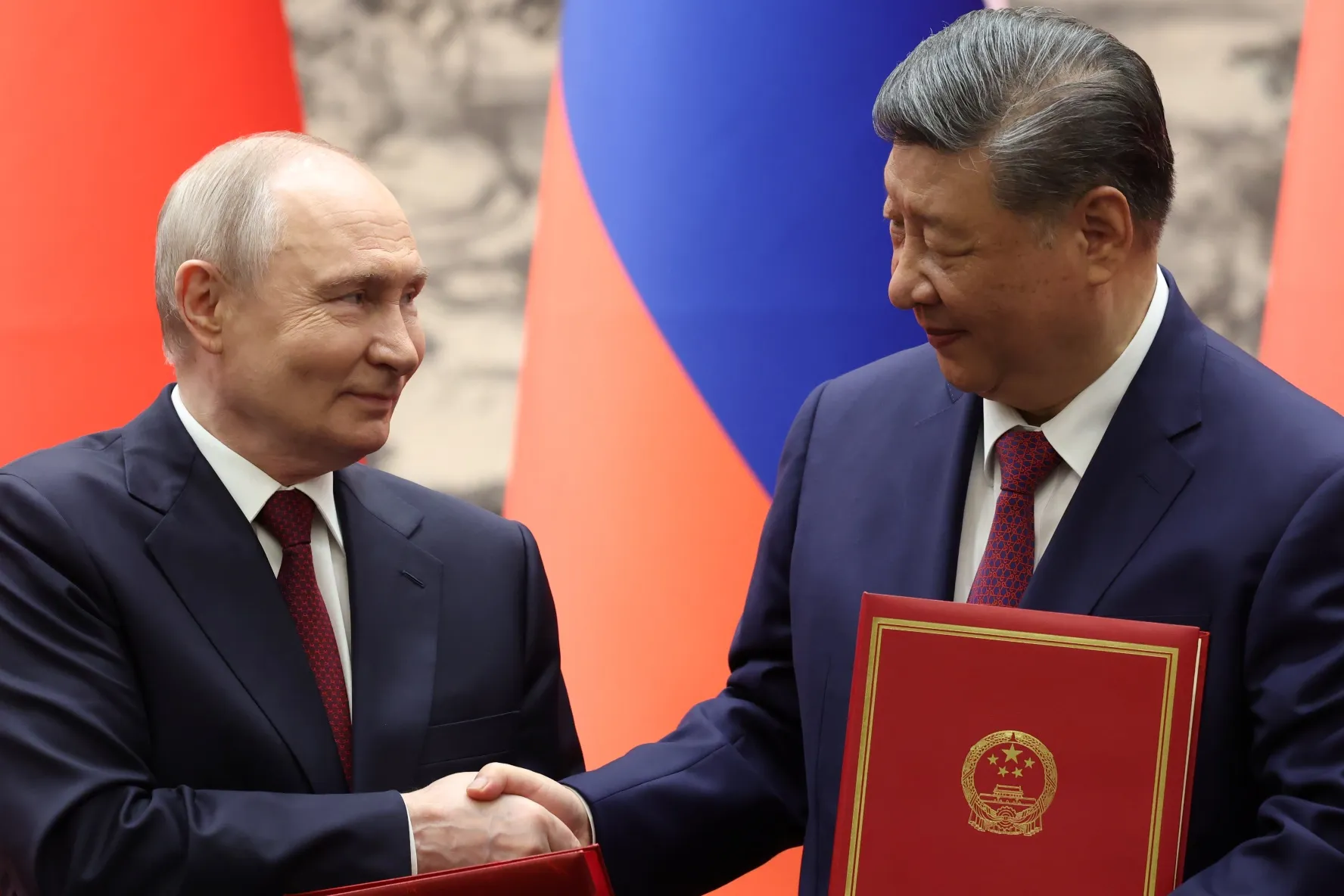
Zaviye Institute for Strategic Studies – Exclusive Translation: Half a century ago, Washington occupied the pivotal position between Beijing and Moscow. Both China and the Soviet Union had compelling reasons to improve relations with the United States, giving American leaders leverage over them. Today, this triangle has been reversed. China and Russia have established a close strategic partnership that limits Washington’s ability to exploit divisions between them, while the decline of American leadership in the international system has further weakened its ability to influence them.
As could be predicted, the unprecedented meeting between US President Donald Trump, Chinese President Xi Jinping and Russian President Vladimir Putin on the sidelines of the Asia-Pacific Economic Cooperation summit in Shenzhen did not lead to major progress on arms control or the war in Ukraine. Instead, the meeting may have shown how much America’s position in the strategic triangle has changed.
The Logic of Triangular Diplomacy
To understand this change, consider what made triangular diplomacy effective in the first place. In the late 1960s, Chinese leaders were interested in welcoming the proposals of US President Richard Nixon. The Sino-Soviet split had led to armed border clashes in 1969, and closer ties with Washington gave Beijing an important counterweight to Soviet military pressure.
But the appeal of improving relations with the United States extended beyond Sino-Soviet competition. Beijing sought US recognition of the People’s Republic of China (PRC) and progress toward acceptance of its sovereignty claims over Taiwan. For a China emerging from decades of relative international isolation, Washington offered a path toward broader diplomatic and economic engagement with the world’s most advanced economies, many of which were US allies in Europe and Asia. In other words, Beijing found Washington attractive not only because of what the United States could offer bilaterally, but also because of Washington’s pivotal position in the international system and the influence it exercised through its extensive network of alliances and partnerships.
The Nixon administration also presciently understood that rapprochement with China would provide Washington with leverage in its dealings with Moscow. Faced with the prospect of warming US-China relations, Soviet leaders took steps toward détente with Washington.
In 1972, the United States and the Soviet Union reached agreements through the Strategic Arms Limitation Talks that imposed important constraints on the nuclear arms race. Washington and Moscow continued arms-control negotiations to build on these foundations, even as their bilateral rivalry persisted. Détente did not eliminate the dangers of the Cold War or prevent renewed confrontation in subsequent years, but it demonstrated how high-level diplomacy, backed by strategic leverage and sustained negotiations, could produce tangible gains.
An Inverted Strategic Triangle
America’s position in the strategic triangle has changed as a result of the strategic convergence between China and Russia. China and Russia no longer view each other as their primary security threat. Instead, they have established a close strategic partnership rooted in shared grievances and a common desire to challenge what they see as a Western-dominated international order.
This convergence has been taking shape since the end of the Cold War and is unlikely to be weakened by US offers. China is no longer the isolated country it once was during the first half of the Cold War. As I write about in my forthcoming book, Without Limits: China’s Global Quest for Partners and Influence, it now has an extensive network of strategic partners. Russia has also developed alternative markets and partnerships to mitigate sanctions and Western isolation.
Read more: The China-Russia Relationship and Threats to Vital US Interests
Nevertheless, the United States is hardly without leverage. China’s economy remains dependent on US markets, technology and financial networks, and Beijing has compelling reasons to avoid a destabilizing confrontation with Washington. Moscow has shown little interest in ending its war against Ukraine, but US and European military assistance and diplomatic support for Kyiv remain vital to the war effort. In addition, Western sanctions continue to weigh on Russia’s long-term economic prospects .
Although Washington’s extensive network of allies and partners should give it significant leverage over Beijing and Moscow, the Trump administration is working against itself. Its transactional approach to allies, statements that call into question U.S. commitments to their defense, and willingness to impose tariffs on friends and rivals alike have left Washington less capable of directing collective power toward common objectives. This has not only diminished the United States’ ability to respond to the challenges posed by China and Russia, but has also made it a less attractive negotiating partner.
Meanwhile, Trump’s eagerness to achieve diplomatic breakthroughs with Xi Jinping and Putin has further weakened Washington’s leverage. Without securing any concessions from Putin, he has eased pressure on Ukraine and reduced sanctions against Moscow.
While touting his personal relationship with Xi Jinping and focusing on narrow sectoral victories, such as China’s pledges to purchase agricultural products and U.S. Boeing jets, Beijing has avoided addressing long-standing structural economic disputes. Calling U.S. commitments to Taiwan into question and suggesting that U.S. arms sales could be on the table during negotiations with Beijing have further undermined America’s credibility and bargaining power.
A Summit with Unequal Benefits
The Shenzhen meeting underscored the erosion of the U.S. position in the strategic triangle of great powers. Under these circumstances, a trilateral summit in Shenzhen offered sharply unequal benefits. For Xi, hosting Putin and Trump for a trilateral summit was a diplomatic victory and reinforced Beijing’s image as a peacemaker and an indispensable center of global diplomacy. For Putin, simply having the opportunity to stand alongside Trump and Xi enhanced his international standing and reduced Moscow’s diplomatic isolation—all without making a single meaningful concession regarding the war in Ukraine. For Trump, the gathering was a historic encounter. But what did the United States gain?
Read more: Abu Dhabi Talks: Will the War in Ukraine End?
Trump and the White House have stated that a trilateral summit could produce the progress needed on nuclear arms control. As with some of Trump’s foreign-policy instincts, the basic idea of trilateral diplomacy is not inherently misguided. Given that New START, the last remaining strategic arms-control agreement between the United States and Russia, expired earlier this year, and that China is in the midst of an unprecedented nuclear buildup, reviving arms-control discussions would serve U.S. interests.
But successful negotiations require a strong strategic position and thorough working-level preparation. It is difficult to see how a last-minute summit managed by Beijing could provide a firm foundation for the kind of progress Trump is seeking.
Restoring America’s position in the strategic triangle requires rebuilding Washington’s alliance network. During the period of détente, U.S. leaders recognized that American diplomacy was most effective when the United States could draw on the collective power of its alliance networks and use its strategic advantages to shape its rivals’ calculations. While the trilateral summit in Shenzhen was certainly historic, rather than restoring the image of American power and primacy evident during the Cold War, it showed how far Washington’s position has eroded since the triangular diplomacy of the 1970s.
Reader comments