
Reshaping the Balance of Power in the South Caucasus: From Deepening Relations with Europe to Strategic Implications for Iran
Opportunities and Vulnerabilities of Armenia’s Geopolitical Pivot to the West
 M
Zaviye Institute: Recent developments in Armenia’s foreign policy, particularly the expansion of political and economic relations with Germany, the signing of a defense cooperation program with Italy, and progress on connectivity arrangements with the Republic of Azerbaijan, indicate that Yerevan has entered a new phase in redefining its geopolitical position. These developments cannot be viewed merely as a set of bilateral cooperation initiatives; rather, they should be analyzed within the broader strategy of the government of Nikol Pashinyan to reduce its historic dependence on Russia, diversify its security and economic partners, and consolidate Armenia’s position within the emerging order in the South Caucasus. In effect, Armenia is transitioning from a model of security reliance on Russia toward multilateral balancing centered on the expansion of Western relations—a process that, alongside economic and security opportunities, is creating new geopolitical vulnerabilities.
Deepening Relations with Europe; Economic Diplomacy in Service of a Geopolitical Shift
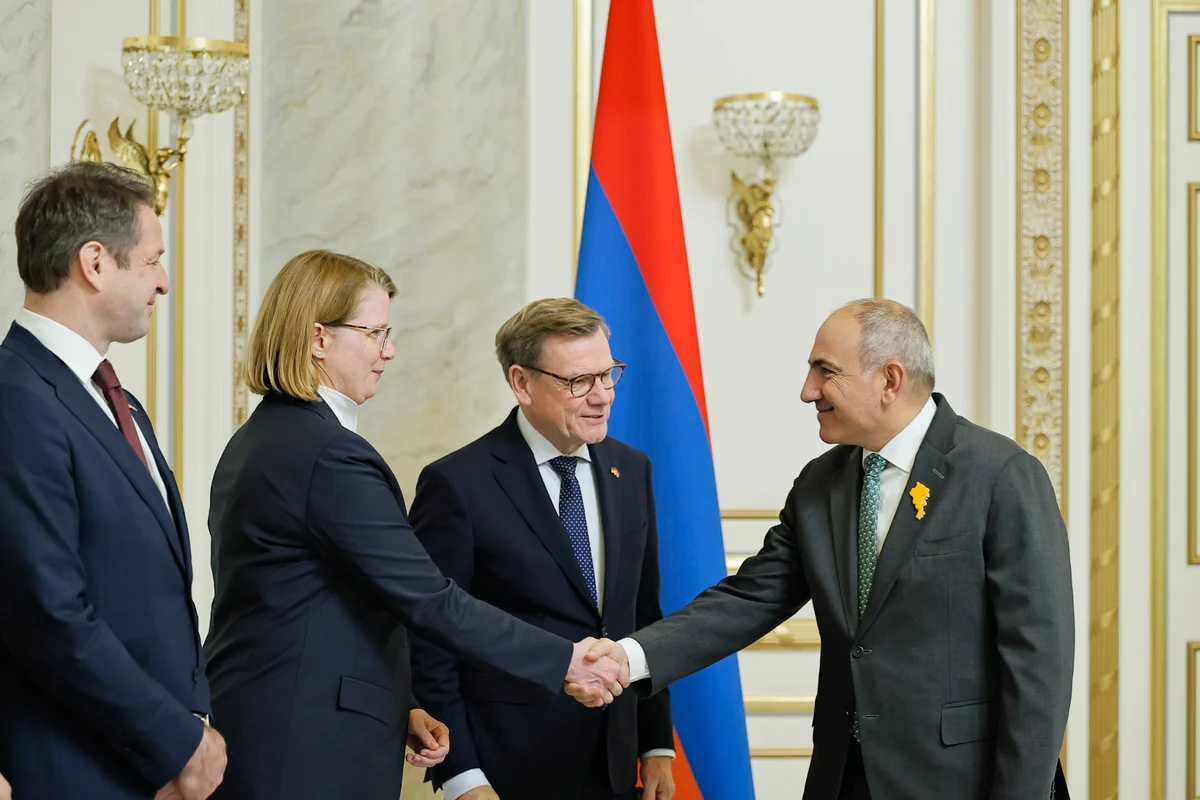
The visit of Johann Wadephul, Germany’s Foreign Minister, to Yerevan and his meeting with Pashinyan are regarded as signs of Armenia’s growing importance in the European Union’s regional policy. The two sides’ emphasis on developing green energy, democratic reforms, and expanding economic relations reflects an effort to transform political cooperation into economic interdependence.
As one of Europe’s economic powers, Germany can play an effective role in reducing Armenia’s energy and trade dependence on Russia. However, Berlin’s balanced approach toward Yerevan and Baku indicates that Germany is seeking not so much to provide one-sided support for Armenia as to increase its own economic and diplomatic influence across the South Caucasus. Accordingly, Yerevan’s rapprochement with Europe should be viewed as part of a broader power competition over shaping the regional order.
Armenia’s Security Transformation; From Dependence on Russia to Defense Cooperation with the West
The signing of the 2027 defense cooperation program between Armenia and Italy complements the process of diversifying Yerevan’s military partners. The significance of this agreement lies less in its operational dimensions than in its political and strategic message. By expanding defense cooperation with European countries, Armenia is seeking both to reform the structure of its armed forces and to reduce its traditional dependence on Russian equipment, training, and security support.
This approach forms part of Armenia’s security transformation project and its networking with the West and East, pursued with the aim of creating alternative options in defense policy. However, military cooperation with European countries does not necessarily mean access to binding security guarantees. Consequently, the gap between expanding defense relations with the West and the emergence of a stable security architecture remains one of the principal vulnerabilities of Yerevan’s new strategy.
Balancing between Europe and Russia; Economic Opportunities and Structural Constraints
Armenia’s expanding relations with the European Union, alongside efforts to reduce its economic vulnerability vis-à-vis Russia, demonstrate Yerevan’s movement toward diversifying its foreign relations. European support for domestic reforms, infrastructure development, and expanding Armenia’s trade access could provide the country with new economic capacities.
However, Armenia’s continued membership in the Eurasian Economic Union and its considerable dependence on Russia in the energy and trade sectors reveal the structural constraints on this shift. In this context, Armenia’s elections and the continuation of its balancing between Europe and Russia are also variables that could affect the pace and scope of the reorientation of Yerevan’s foreign policy.
Therefore, Armenia’s foreign policy should not be regarded as an immediate and complete rupture with Moscow; rather, this process is a gradual effort to redistribute dependencies and increase diplomatic room for maneuver vis-à-vis external actors.
The Trump Route and Peace with Baku; Reconfiguring Geopolitical Competition in the South Caucasus
Another decisive dimension of Armenia’s foreign policy is the process of normalizing relations with the Republic of Azerbaijan and implementing new regional connectivity arrangements. Following the initialing of a peace agreement in Washington in August 2025, efforts to operationalize the project known as the “Trump Route for International Peace and Prosperity,” or TRIPP, signal the gradual transfer of negotiations from the political level to implementation arrangements.
However, the remaining disagreements between Yerevan and Baku, particularly over the legal and political preconditions for a final agreement, demonstrate that the development of regional connectivity does not necessarily mean the achievement of lasting peace.
Read more: Armenia’s Geopolitical Shift, the Trump Route, and the Challenge to Russia
From a geopolitical perspective, Armenia’s geopolitical pivot, the Trump Route and the challenge posed to Russia are three interconnected components in the reconfiguration of the South Caucasus balance of power. The development of this route could lead to an increase in the United States’ economic and strategic presence and reduce Russia’s traditional monopoly over certain regional connectivity arrangements. Conversely, ambiguity surrounding the project’s implementation and security mechanisms will heighten the sensitivities of regional actors, particularly Iran.
Implications of Armenia’s Pivot for Iran: The Need to Redefine Tehran’s Caucasus Policy
For the Islamic Republic of Iran, the main issue is not merely the expansion of Armenia’s relations with the West; rather, what matters is the impact of this trend on the balance of power, border security and Iran’s connectivity position in the South Caucasus. On the one hand, Tehran could benefit from Armenia’s economic development, the strengthening of Yerevan’s decision-making independence and the expansion of regional trade routes; on the other, it may be concerned about the emergence of new security arrangements involving extra-regional powers.
Within this framework, preserving Armenia’s sovereignty over its connectivity routes, maintaining the common border between Iran and Armenia, and preventing transit infrastructure from becoming an instrument of security competition are among Tehran’s most important strategic considerations.
From a policymaking perspective, Iran needs an active, pragmatic and non-confrontational approach to developments in Armenia’s foreign policy. Expanding cooperation in infrastructure, energy and transport, strengthening economic ties with Yerevan, and continuing security dialogue could help preserve Iran’s role in regional dynamics.
Overall, Armenia’s geopolitical pivot towards the West should be viewed as an effort to enhance strategic independence and reduce traditional dependencies, rather than necessarily as a complete rupture in its relations with Russia. The success of this strategy will depend on the extent of practical European support, the sustainability of the peace process with the Republic of Azerbaijan, and Yerevan’s ability to manage the sensitivities of Tehran and Moscow. For Iran, the most important imperative is to move beyond a purely reactive approach and strengthen its economic and diplomatic instruments; otherwise, if Tehran’s regional policy fails to adapt to the new developments, the likelihood of a gradual decline in Iran’s geopolitical weight within the emerging architecture of the South Caucasus will increase.
Reader comments